
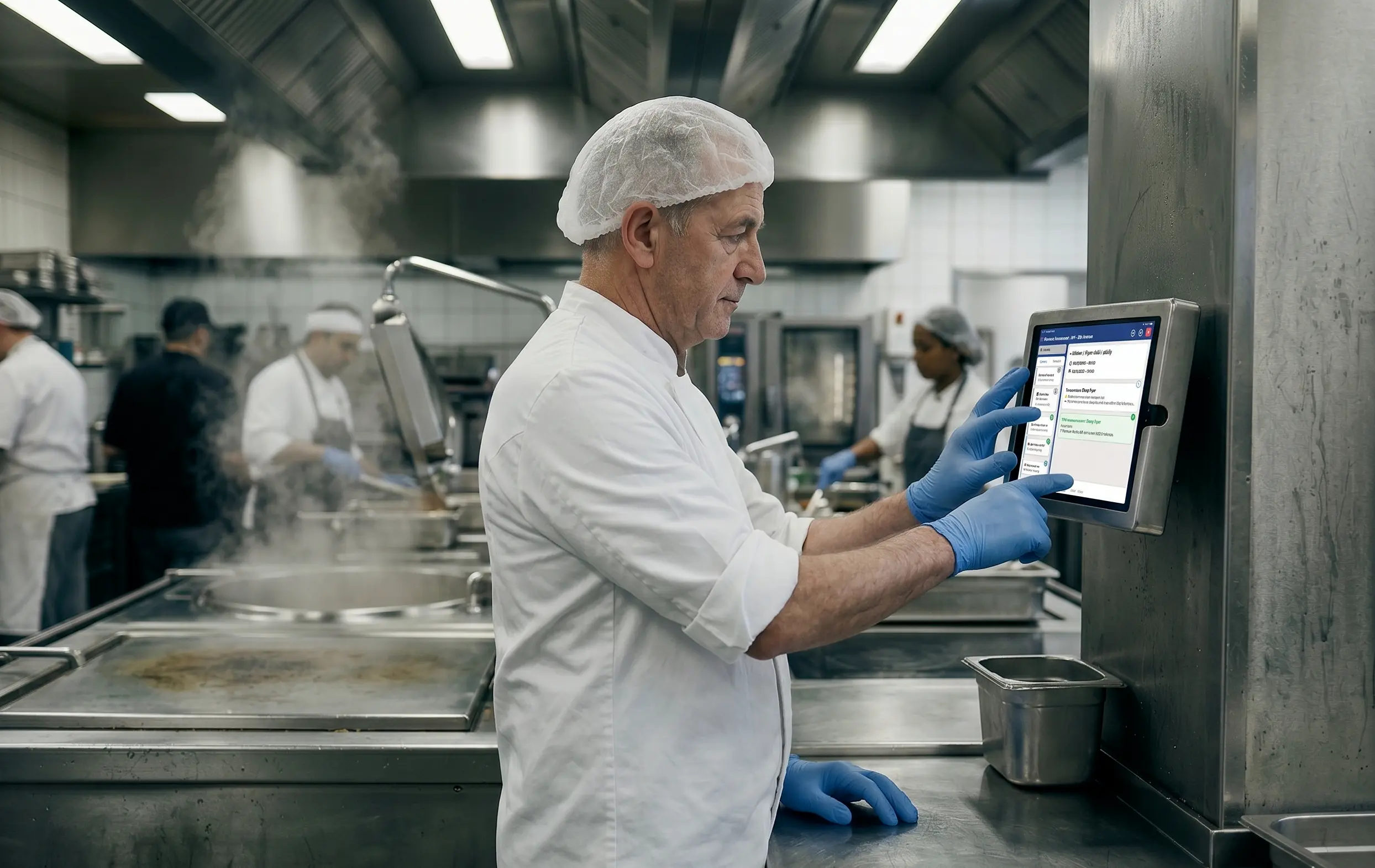
Quality management is decided in daily operations.
Detect deviations early and resolve them directly in daily operations.
How do you know whether quality management works?
Whether quality management holds up does not get decided at headquarters. It gets decided on the floor at every location.
It is not the method that makes the difference. What matters is whether deviations get caught early and resolved for real.
When store networks grow, the short path stops working. More locations, more teams, more handoffs. And more places where information can fall through the cracks.
Standards are rarely the problem. Alerts arrive too late or lose traction in daily operations.
flowtify makes deviations visible early in daily operations, assigns them to the people responsible with a deadline, and escalates when a deadline passes.
Effectiveness in daily operations
Recorded is not the same as resolved.
Effectiveness means that risks become visible early, that weak points do not keep repeating, and that decisions in daily operations rest on reliable data. Where this works, reliability emerges.
At a single site this is manageable. It becomes more complex as soon as signals about deviations travel across multiple roles, shifts, and locations. The handover between people then decides whether information arrives in time to take effect.
A temperature deviation in a cold storage area is not first noticed at the next shift change, but measured, assessed, and addressed immediately, before products are affected. A blocked emergency exit is not only documented, but tracked through to clearance.
A case becomes effective only when assessment, action, and closure are in place. As long as these three steps stay together, the system holds up under pressure.
Reported is not the same as resolved.
Detection, assessment, and response then drift apart in time. Deviations are recorded but only evaluated later. What could have been corrected in the moment becomes visible only when the case is long closed.
Actions are decided without being able to verify their effect. Comparisons remain retrospective, and adjustment only begins once the operational moment has already passed.
Documentation can be complete and still take effect too late. What ultimately matters is not whether an incident was recorded, but whether the initiated action actually leads to fewer deviations and whether known weak points stop recurring.
Feedback must happen during live operations, not afterwards. Only then can mistakes be corrected while they are still correctable. Quality assurance does not end at recording. It shows in whether decisions stand up in daily operations.
What follows from this
More controls do not automatically lead to more effect. What matters is what happens after the report: who evaluates, who acts, who closes the case. A system has to make this sequence visible.
Proven, day after day
Where flowtify comes in
flowtify complements technical quality management as the foundation for daily implementation in operations.
Documentation, automated temperature capture, and audit results come together in one place.
Deviations are not only recorded. During live operations it becomes visible whether initiated actions are taking effect.
Quality assurance thus becomes reliable in daily operations and at the same time traceable where decisions must be dependable.
Processes remain documented for full audit traceability.
Effectiveness becomes verifiable, not just documented.
Related topics

Digital quality assurance in daily operations
How self-checks, documentation, and deviations are digitally structured

Coordinating teams day-to-day
How shared responsibility stays visible and manageable when teams work side by side

Security and compliance
Certified infrastructure, encrypted data, and traceable audit trails
Detect deviations early and adjust actions in daily operations
In the conversation we assess where response time is lost during live operations and how quality assurance remains dependable in daily operations.