
Digital quality assurance in daily operations
Connect self-checks, temperature monitoring, and audits in day-to-day operations.
Why is operational quality assurance decided in daily practice?
Digital quality management means defining company-wide standards once, rolling them out uniformly to every location with room for local specifics, and resolving deviations through corrective and preventive actions (CAPA) in live operations. Standards stay protected and centrally comparable, without forcing every site into the same mold. flowtify turns quality management into a steering routine that works on the floor, not just at headquarters. Standards are defined. Daily operations determine whether they are implemented reliably.
In day-to-day work, it becomes clear whether self-checks are performed regularly, deviations are detected in time, and evidence is maintained completely. This is where gaps emerge, when staffing is short, peak times strain the operation, or the unexpected happens.
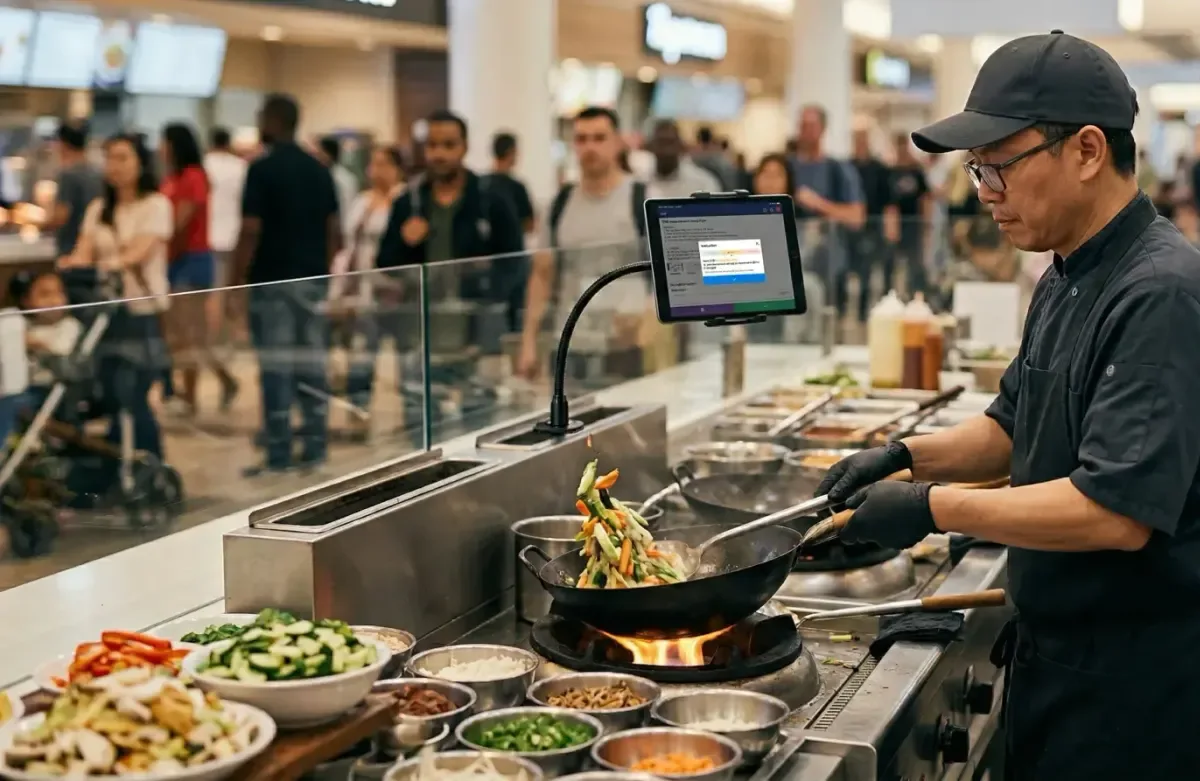
Fresh counters, storage, refrigeration, cleaning, and service run in parallel. Teams need to know what must be done today, who is responsible, and when evidence must be available. Leadership must be able to see where a site is stable, where deviations accumulate, and where support becomes necessary.
This is where operational quality assurance begins: over 1.450.000 solved issues in the last 30 days show how deeply the platform is anchored in your daily operations.
Quality assurance in daily operations
Operational quality assurance only remains resilient when core building blocks interlock cleanly in everyday work.
In day-to-day operations, multiple elements interlock to form a stable self-monitoring system. What matters is not a single process, but how checks, deviations, evidence, and steering work together. Daily operations reveal how these building blocks interconnect.
Structure self-checks in daily operations
Detect and handle deviations systematically
Keep evidence and documentation traceable
Steer quality assurance across locations
flowtify PLATFORM
Detect and handle deviations systematically
Deviations are part of daily operations. What matters is how quickly they are detected, assessed, and handled.
If a reading is outside a defined limit or a hygiene issue is identified, a clear workflow starts: first the situation is classified, then an action is implemented and documented. Only after verifying that the original issue has been resolved is the case considered closed.
This workflow becomes especially clear with a temperature deviation: first, a re-measurement is taken. Then it is assessed whether the product can still be used. If not, it is separated or disposed of. The decision is recorded as part of HACCP documentation.
The same approach applies to many other situations: a blocked emergency exit, dirty work areas, or technical malfunctions must be assessed, resolved, and documented in a traceable manner.
With flowtify, open issues do not linger in daily operations. Each case is handled, assessed, and closed. Responsible roles can always see which deviations occurred and which actions have already been implemented.
Keep evidence and documentation traceable
Food safety controls do not only evaluate individual readings. What matters is whether the entire control workflow can still be traced later.
If a deviation is found, it must remain clear what exactly happened: who took the reading, how the situation was assessed, which action was initiated, and when the case was closed.
An example from goods receiving in institutional catering illustrates this workflow.
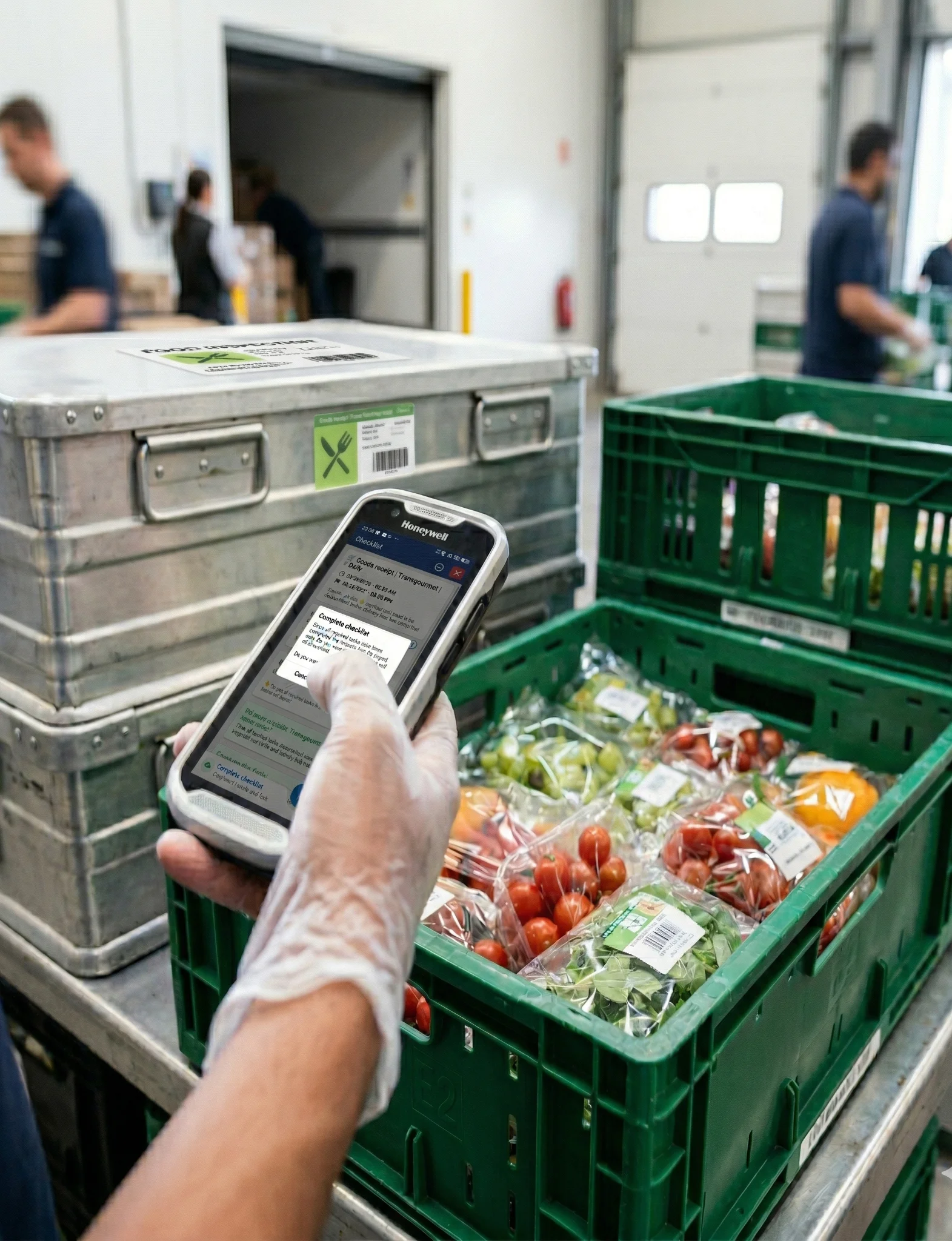
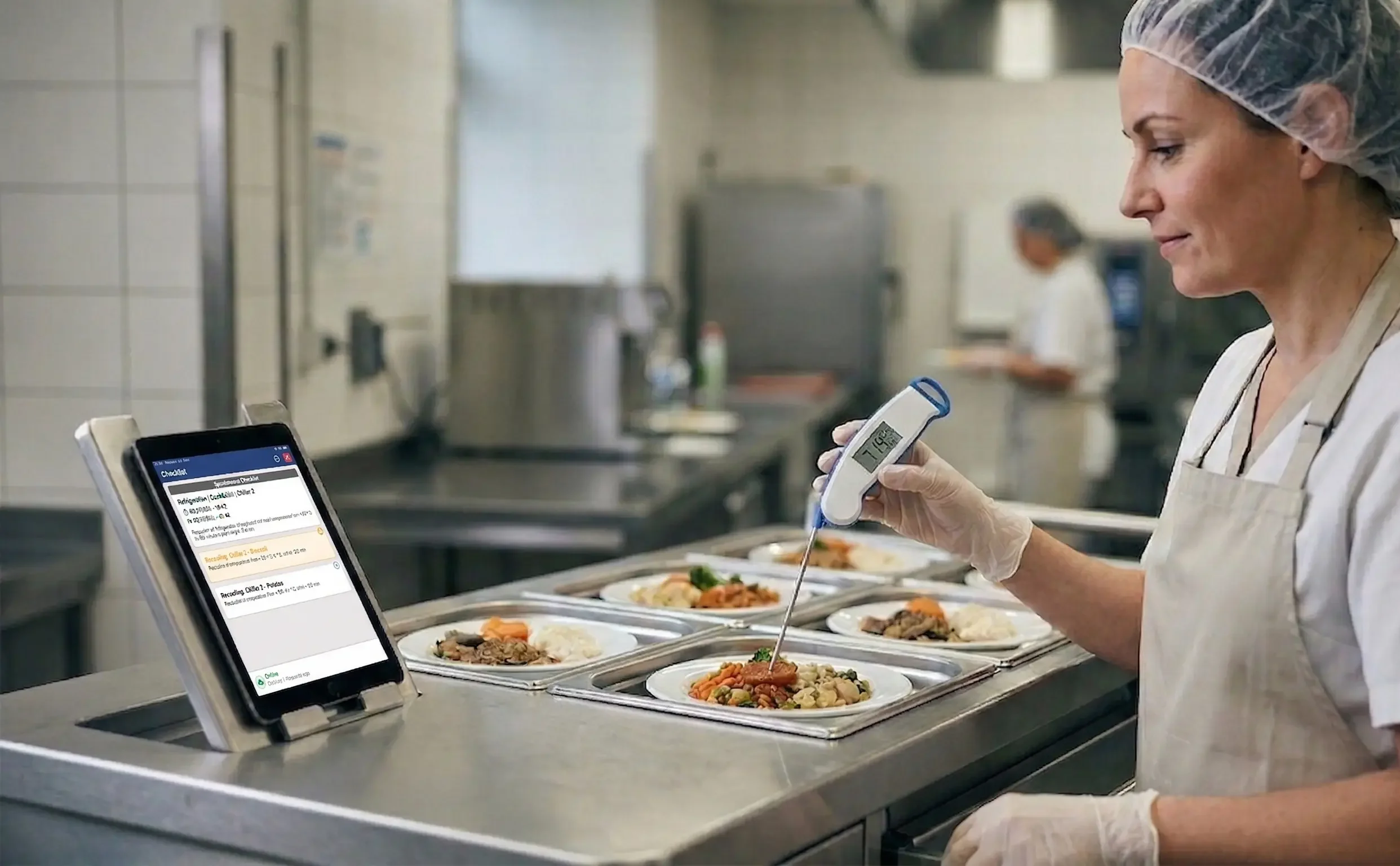
A chef de partie measures the vehicle refrigeration temperature upon delivery. The target is 4 °C, the measured value is 7 °C.
The value is marked as a deviation. Next, a re-measurement is taken directly on the product. If the surface temperature is within the acceptable range, the goods can be accepted. If it is above, a decision must be made on how to proceed.
Possible actions include separate storage, rejecting the delivery, or blocking the goods. The decision is documented and remains traceable later.
This keeps it traceable what was measured, how the situation was assessed, and who made the decision. For store management, regional responsibility, and central quality assurance, it remains clear which issues occurred and which actions have already been implemented.
Steer quality assurance across locations
In organizations with multiple locations, it is not enough for each site to document self-checks locally. Leadership roles must be able to see whether processes are stable across locations.
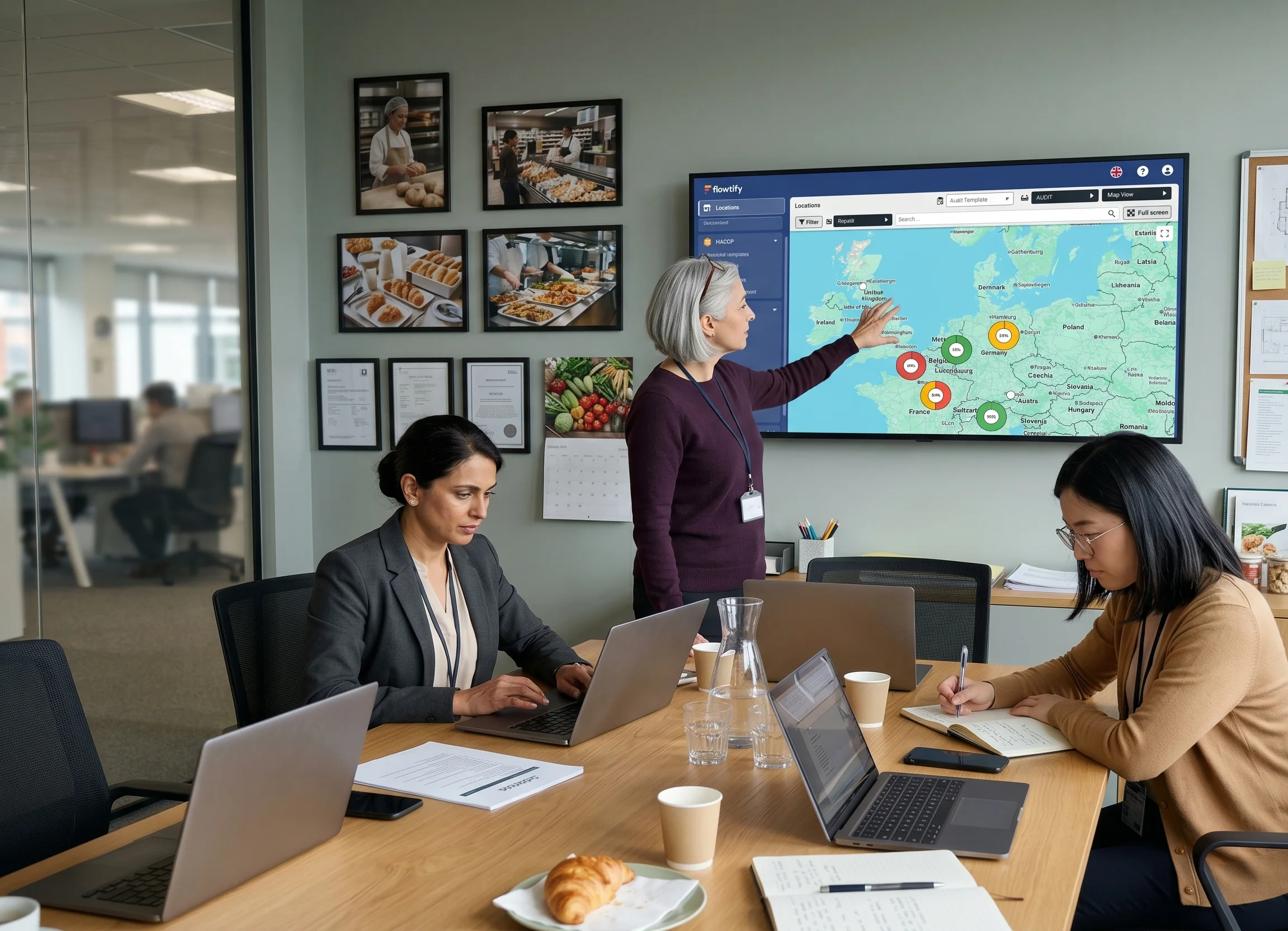
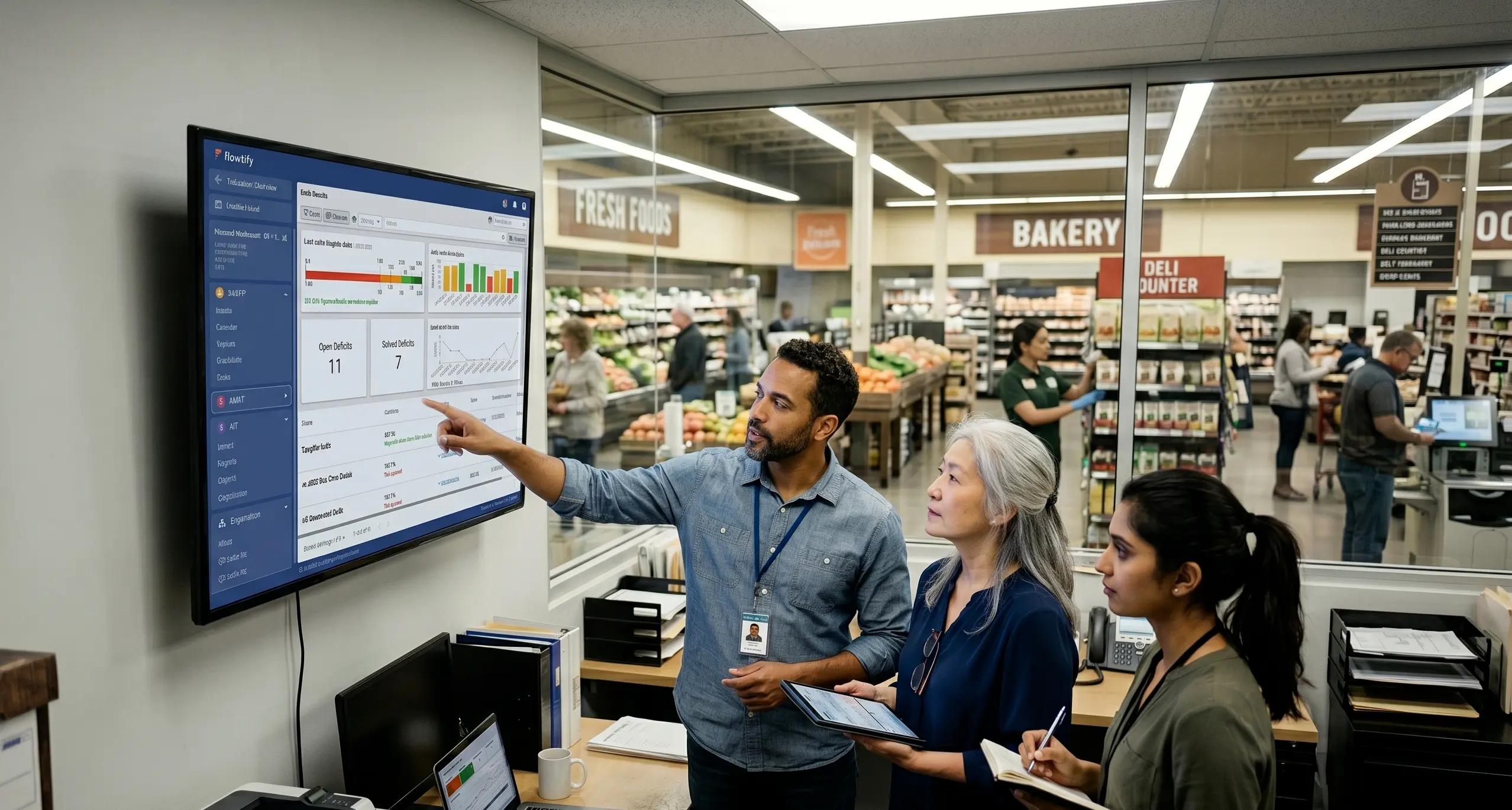
Digital systems consolidate results from many locations. Checklist completions, readings, deviations, and actions are not only documented at the site level, but can be analyzed centrally.
Central analysis gives an overview of the entire network. Recurring deviations become visible, developments can be classified, and operational risks can be assessed early.
At the same time, it remains traceable where an issue originated. Each deviation is linked to the specific site, the responsible person, and the exact time.
For multi-site networks, operating groups, or franchise systems, quality assurance becomes steerable. Leadership roles not only see individual incidents, but patterns across the entire system.
Digital systems for operational quality assurance
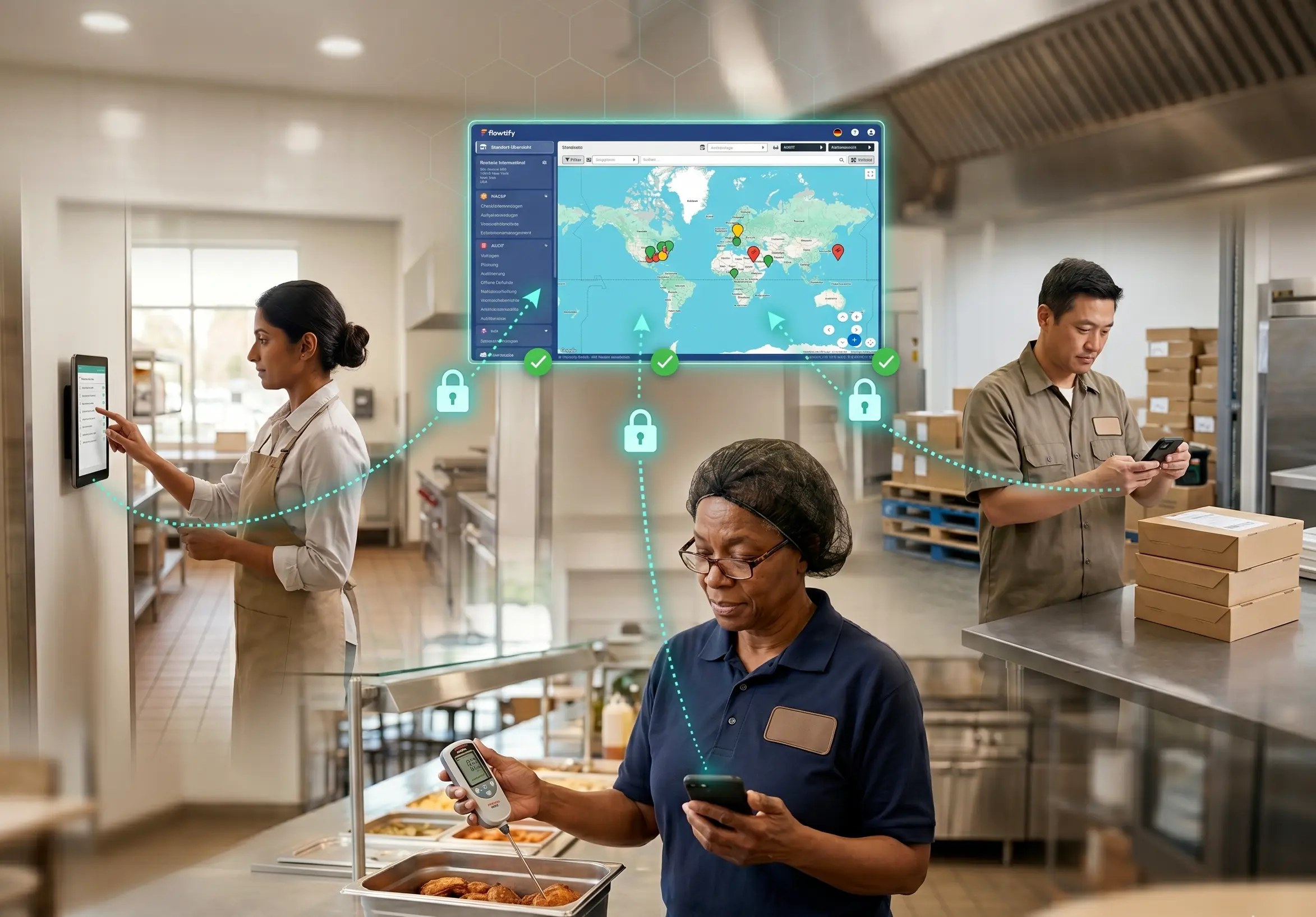
In multi-site structures, many individual records are created every day: self-checks are completed, temperatures are measured, deviations are handled, and actions are documented.
As long as this information is kept separate, maintaining an overview is difficult. Checklists sit on site, temperature data comes from refrigeration systems, and audit reports are maintained separately. Relationships often become visible only when information is merged manually.
Digital systems create a shared working foundation. Self-checks, temperature curves, deviations, and audit results are documented and analyzed on one platform.
In flowtify, the individual modules take on different roles.
flowtify HACCP guides daily self-checks as clearly structured tasks with deadlines and responsibilities. flowtify SENSORS documents temperature trends automatically and monitors defined limits around the clock. flowtify AUDIT makes internal and external audit outcomes comparable and derives actions and priorities. With Supervision, additional external roles can be involved where needed (auditors, service providers, or advisory experts), while access and responsibilities remain clearly governed.
Why structured systems are essential in multi-site organizations
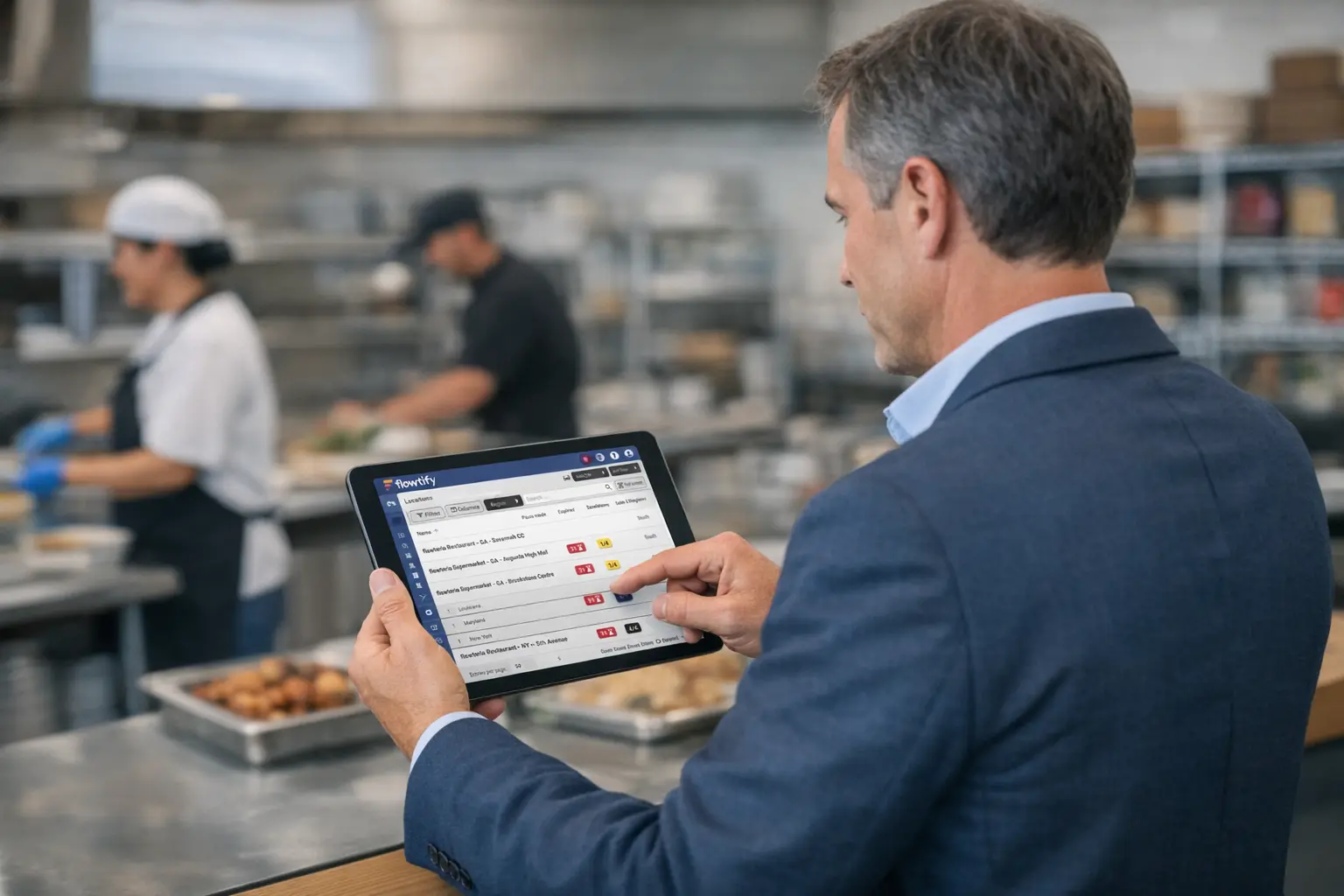
With each additional location, quality assurance becomes more complex. Self-checks, temperature monitoring, audit findings, and actions must not only work on site, but remain traceable across locations.
When this information is maintained separately, a patchwork of documents, lists, and single-purpose systems quickly emerges. Checklists sit on site, temperature data comes from refrigeration systems, and audit reports are documented separately. Relationships often become visible only when information is merged manually.
In larger networks, that is not enough. Responsible roles need to see where deviations accumulate, which actions are still open, and whether risks intensify in certain regions or areas.
Structured systems create a shared foundation for this. Self-checks, readings, deviations, and actions follow a clear logic and remain comparable across locations.
Quality assurance becomes not only documented, but deliberately steerable. Decisions are based on current operational data instead of individual reports or retroactively compiled summaries.
Run operational quality assurance reliably in daily work
In the conversation, we clarify how self-checks, deviations, and evidence interact in daily operations, and which entry point into digitization makes sense.
Book a consultationflowtify HACCP in action
Run daily operations with flowtify HACCP
Implement operational self-checks reliably in day-to-day work
In daily operations, self-checks need to appear at the right time and be completed consistently.
flowtify HACCP maps existing HACCP concepts and self-documentation as a digital self-monitoring system and carries them into daily practice. Digital checklists ensure tasks appear at the right time and are completed reliably.
Hygiene checks, temperature checks, approvals, or cleaning records are not collected later. They are performed during operations, documented, and closed immediately.
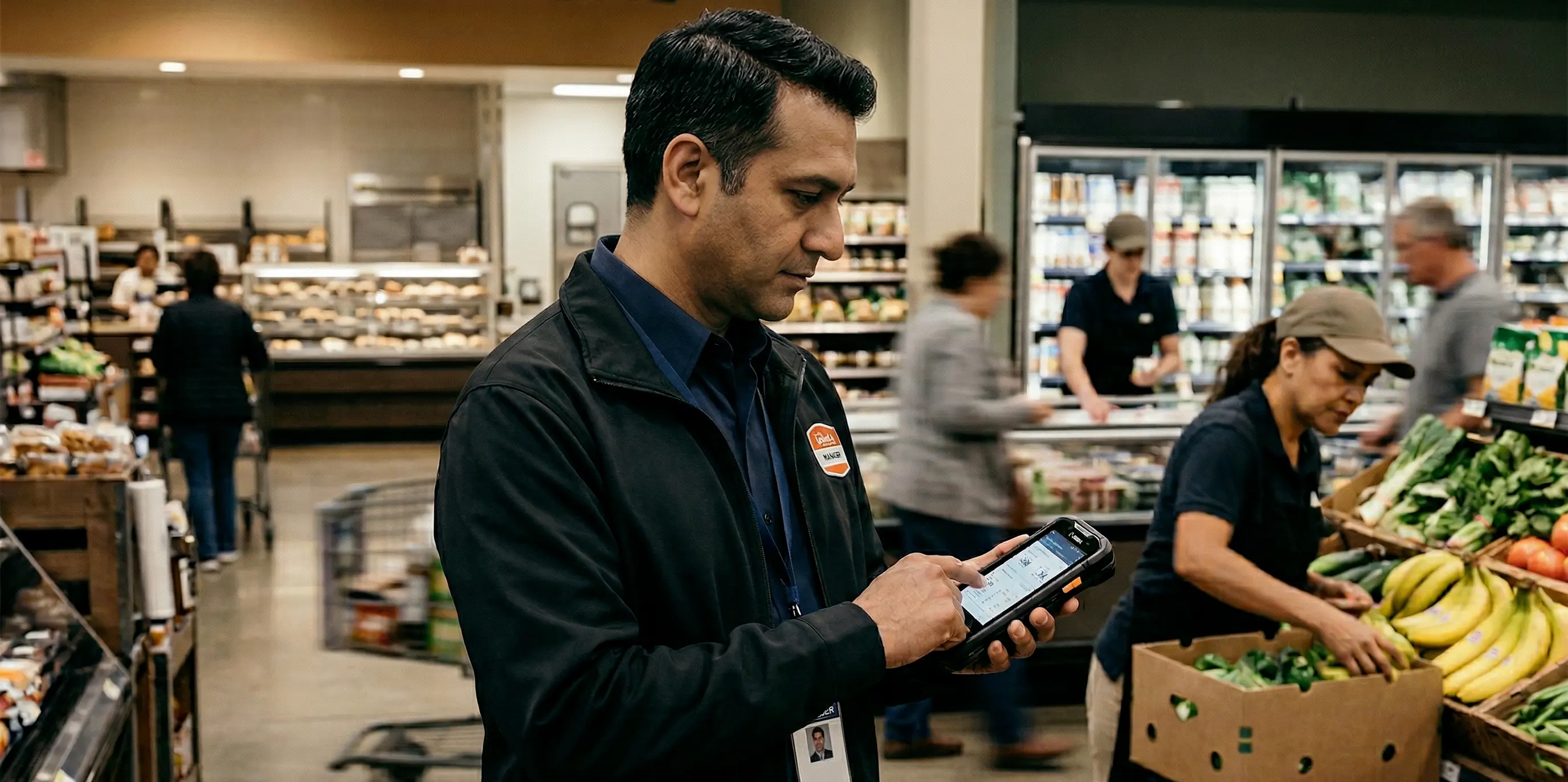
Tasks appear with clear responsibilities and deadlines on the devices already used in the operation. This keeps the self-monitoring system stable, even during peak periods or with changing teams.
Checks are completed, deviations are assessed, and actions are documented. The current status remains traceable at all times, for the site, for the region, and for central quality management.
Self-checks do not remain a theoretical concept from a HACCP manual, but a reliable part of daily operations.
Time windows create calm in operations
Checks must happen at the right moment
Standards help little if tasks are completed at any time. In daily operations, what matters is that checks happen at the right moment.
Not earlier, not later. Completed, open, and overdue tasks must be clearly visible. This helps teams prioritize and reduces questions during shifts.
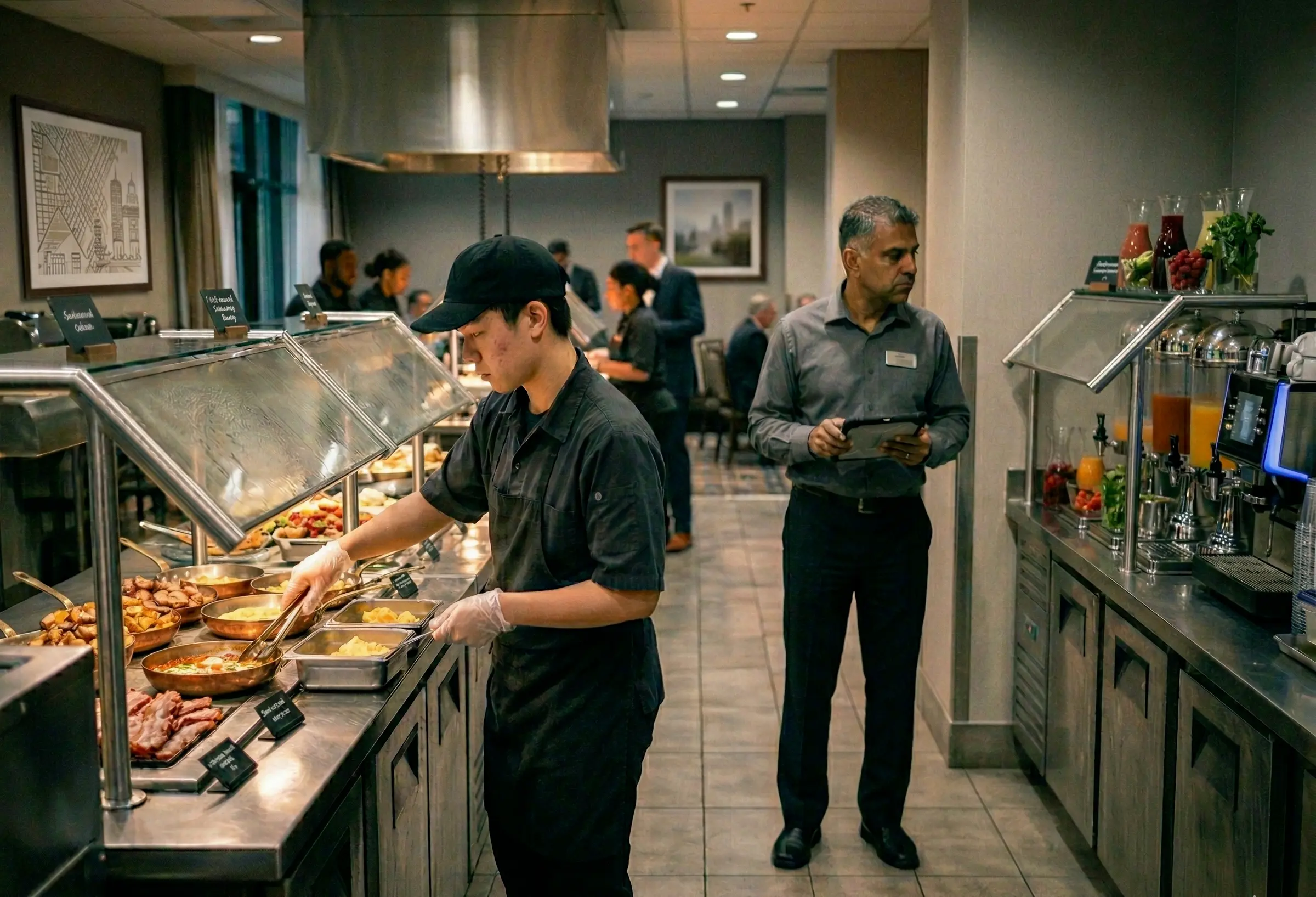
Especially at fresh counters, bake-off, kitchen, or breakfast service, many checks run in parallel. Hygiene checks, temperature checks, approvals, and cleaning records must be integrated so they happen at the right time and do not get lost.
In fresh food areas, it becomes obvious how many checks run simultaneously: equipment hygiene, condensation or icing, unobstructed airflow, and correctly stored tools.
In bake-off, similar checkpoints apply: tongs requirement, emptied crumb trays, compliance with thawing and holding times, and correct labels.
flowtify HACCP delivers these standards at the right moment to mobile devices already used during shifts, with clear responsibility and deadlines.
Everyone can see what is due now and how much time remains, whether in retail, in the kitchen, or at the breakfast buffet. This supports team prioritization.
This brings calm to shifts. Tasks are easier to classify and priorities remain visible.

A deviation is the starting point, not the end
Review, assess, and decide on deviations in a traceable way
Self-checks only fulfill their purpose when deviations are handled consistently. A check does not end with identifying a problem, but with a traceable decision.
If a temperature is outside a defined limit or a hygiene issue is identified, a structured workflow begins. First the situation is reviewed and classified, then an appropriate action is implemented and documented. Only when the original issue is resolved or assessed is the case considered closed.
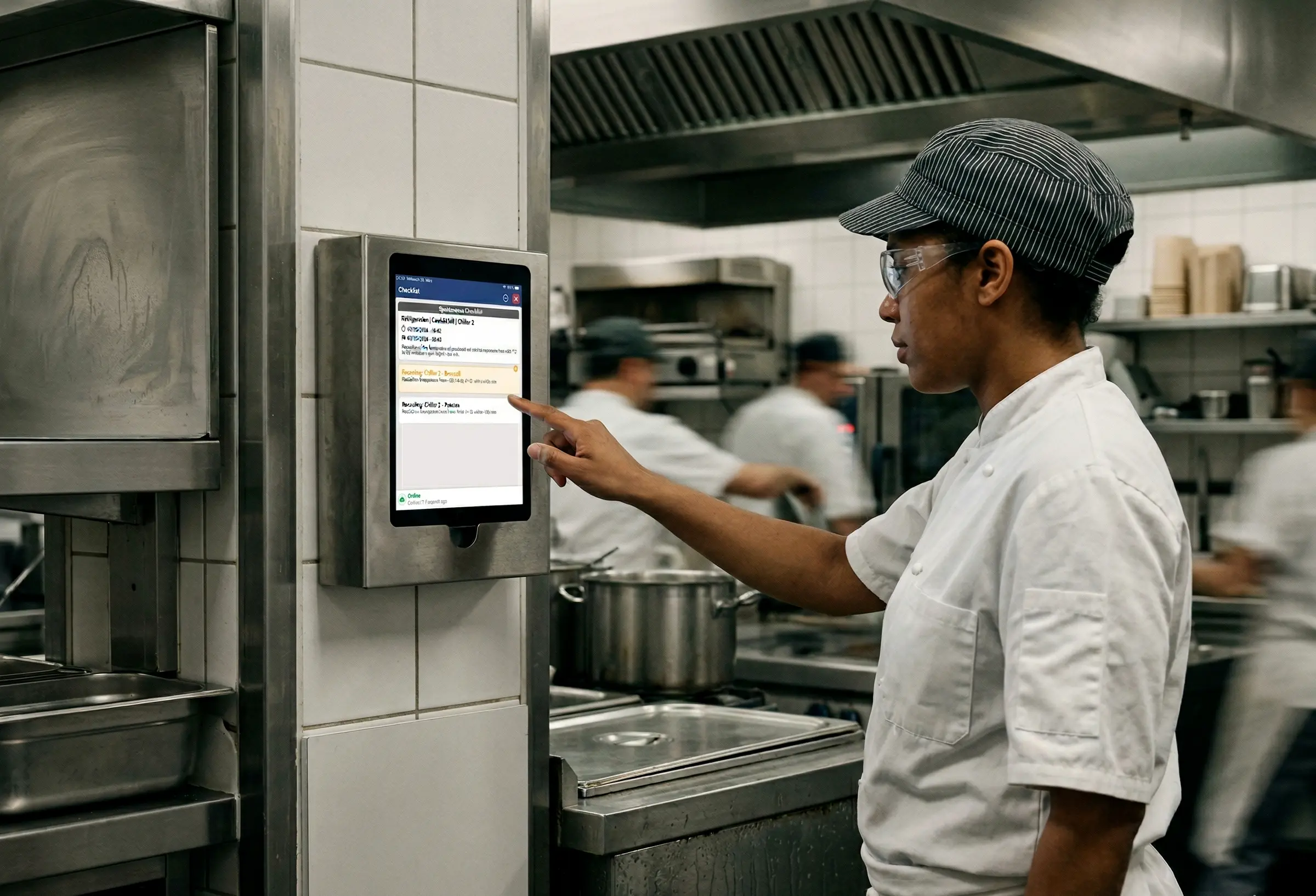
A typical example is goods receiving in institutional catering: a chef de partie measures the temperature in the refrigerated vehicle. The target is four degrees, the measured value is seven. The system marks the value as a deviation and guides to the next step.
Next, a re-measurement is taken directly on the product. If the product temperature meets requirements, the delivery can be accepted and the case can be closed in a traceable way.
If the product temperature is also outside the acceptable range, the system requires a decision. Goods can be blocked, rejected, or stored separately. The selected action is recorded and remains traceable later.
Kitchen management is only involved when the situation cannot be conclusively assessed on site. Decisions remain clearly documented and visible to all involved roles.
Open cases do not remain in daily operations. Deviations are reviewed, actions implemented, and outcomes recorded. Responsible roles can always see what has already been clarified and where action is still required.
Implement processes reliably in daily operations
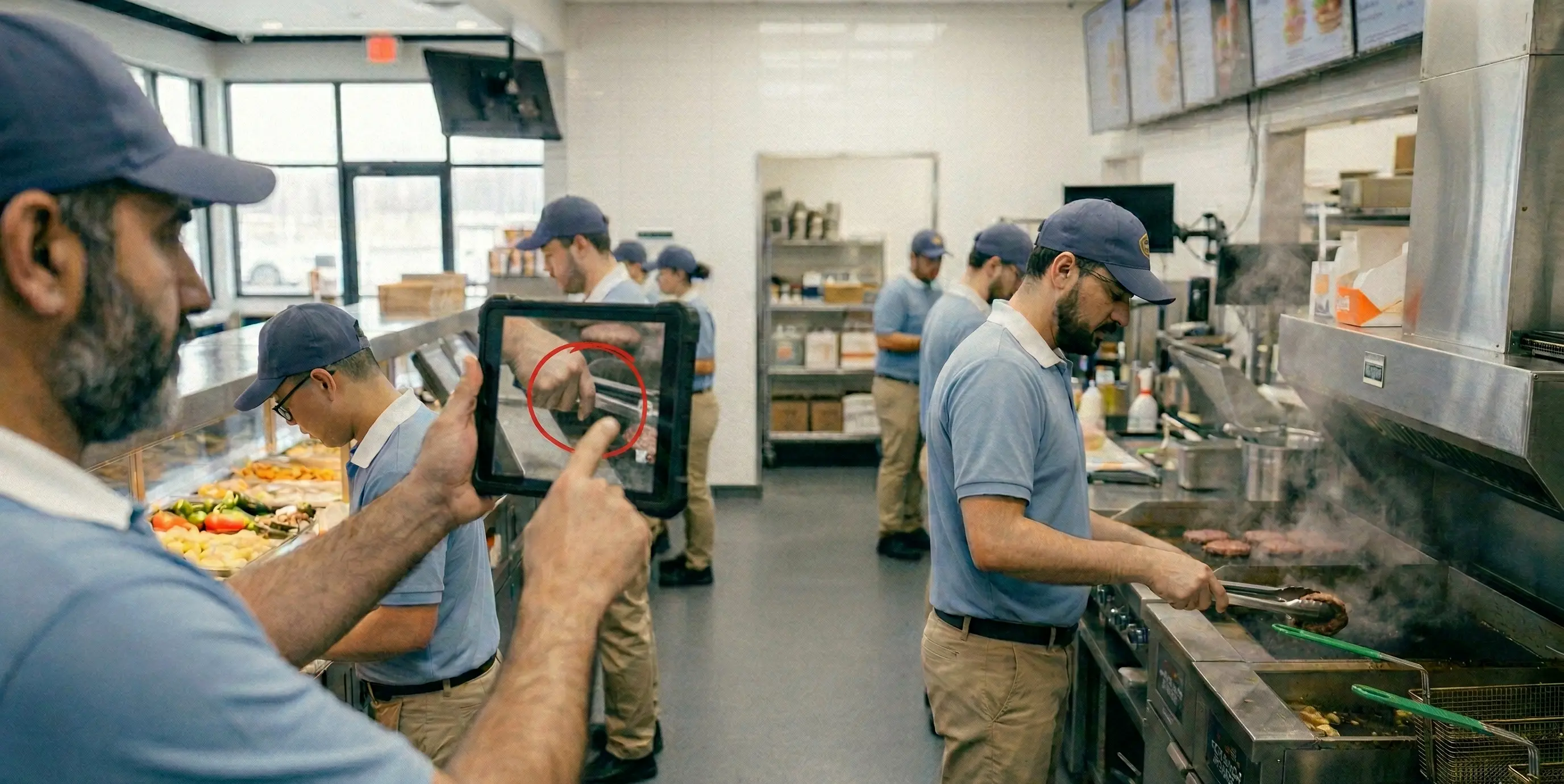
Standards only work if they work on site
Under time pressure, with changing teams and high frequency, it becomes clear whether processes actually hold up on site.
Many tasks run in parallel. Preparation, service, cleaning, goods receiving, or temperature checks must happen at the right moment, while employees switch between areas and responsibilities.
Standards only hold up in daily work if they remain understandable and feasible. Employees must be able to see which tasks are currently due and how important they are.
Digital checklists help structure these workflows clearly. Tasks appear at the right time, responsibilities are assigned unambiguously, and completed steps remain documented in a traceable way.
This creates reliability in daily operations. Teams know what needs to be done now, even when the operation is under high load.
Maintain standards when many things matter at once
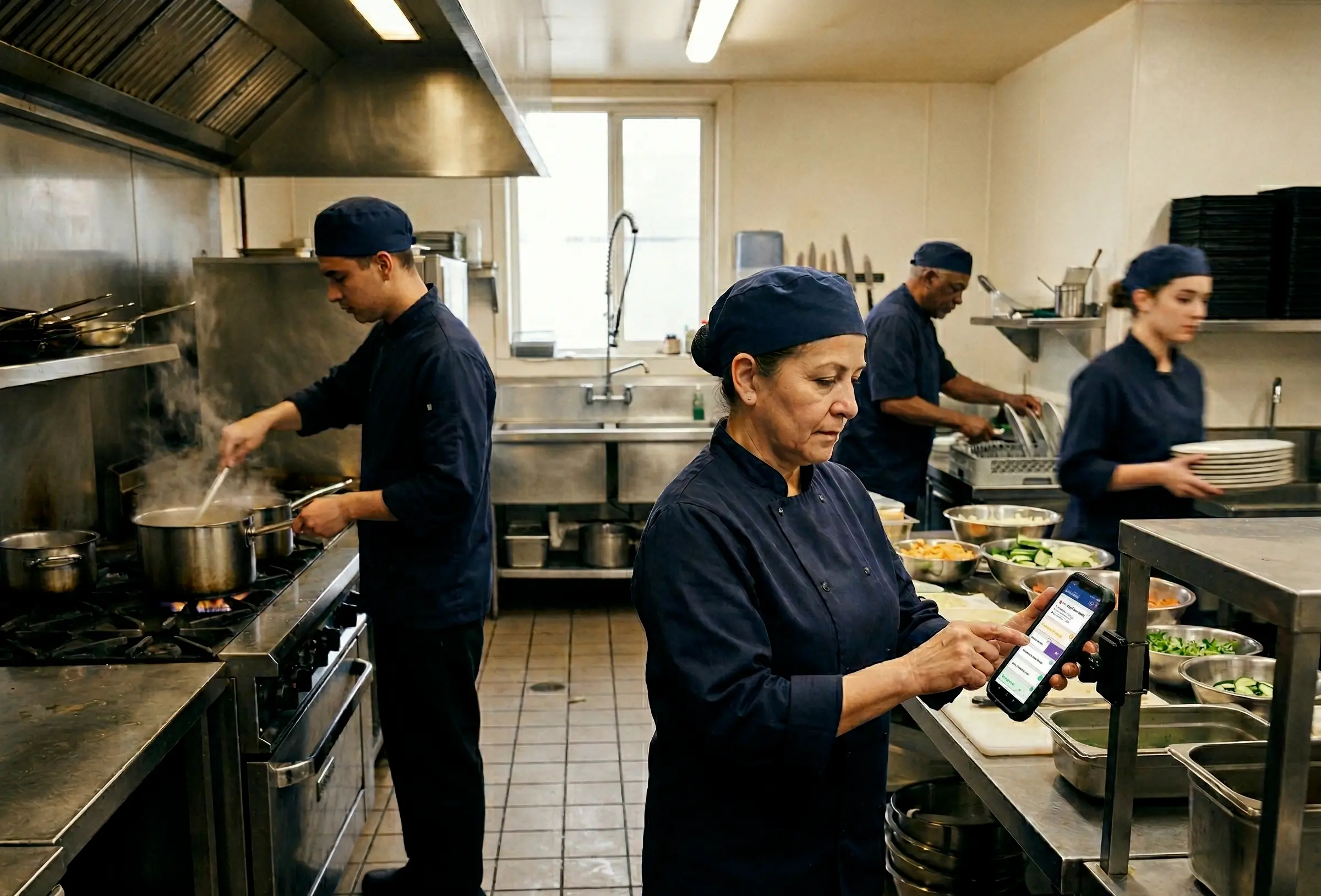
Breakfast service, peak times, and changing teams
Peak periods reveal whether a self-monitoring system really works in daily operations. Preparation, service, cleaning, and re-production run in parallel, while employees switch between tasks.
One example is breakfast service in hotels or institutional catering. Buffet setup, signage, temperature checks, and replenishment must be coordinated while guests are already present.
Hot-holding equipment must remain within defined temperature limits. Chilled plates for sensitive products must not warm up. At the same time, labels must be correct and work surfaces must remain clean.
Such situations can only be managed stably when tasks are clearly structured. Teams must see which checks are currently due and who is responsible.
Binding tasks appear at the right time and remain documented cleanly, even with cross-functional collaboration. Supporting process plans help in the background when workflows are implemented independently for the first time or must be followed safely under high load.
Guided tasks keep standards stable even under high utilization. Checks are not forgotten and evidence remains fully traceable.
Steer quality assurance across multiple locations
Recognize stability of individual sites and patterns across the system
In multi-site operations, quality assurance is not only created in an individual site. It also depends on how developments become visible across multiple locations.
One site can be stable while similar deviations occur repeatedly elsewhere. Such patterns are easily missed when self-checks and documentation are viewed only locally.
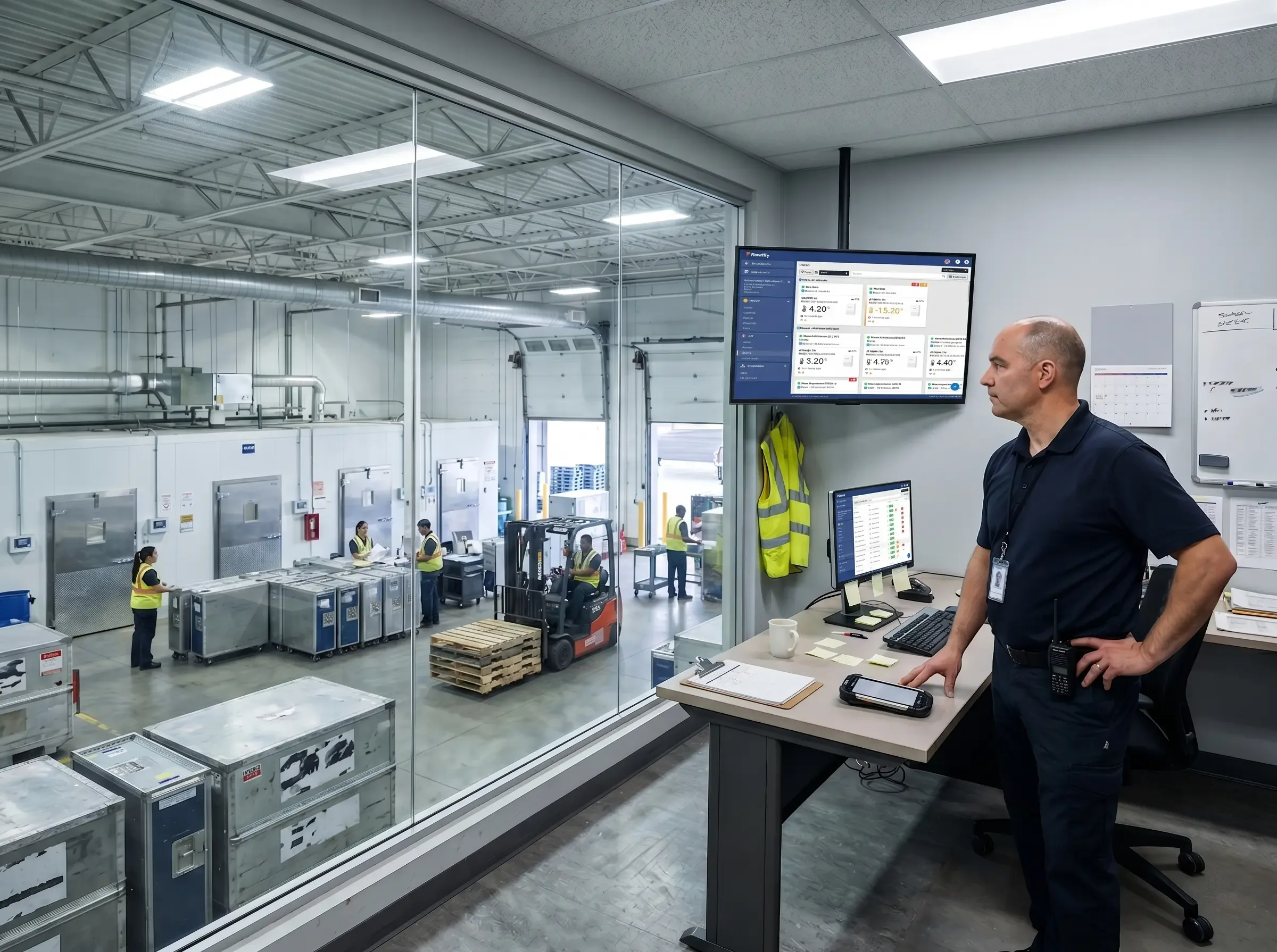
Comparative site analytics make developments visible early. Responsible roles can see where processes work reliably and where recurring issues emerge.
This includes, for example, temperature deviations in certain refrigerated units, recurring hygiene issues in specific work areas, or self-checks being completed late.
Once such patterns become visible, actions can be derived in a targeted way. Technical issues can be identified faster, training needs become clearer, and individual sites can be supported intentionally.
Quality assurance becomes not only reactive, but deliberately steerable. Developments remain traceable and comparable over longer time frames.

flowtify SENSORS monitoring continuously
Temperature monitoring with flowtify SENSORS (video)
Monitor temperature trends continuously instead of capturing single values
Temperatures are key control points in many HACCP concepts. Cold rooms, display fridges, freezers, or hot-holding zones must remain within defined limits.
In many operations, temperatures are measured manually at fixed intervals. Single readings document the state at a given moment, but they do not show how temperature develops between measurements.
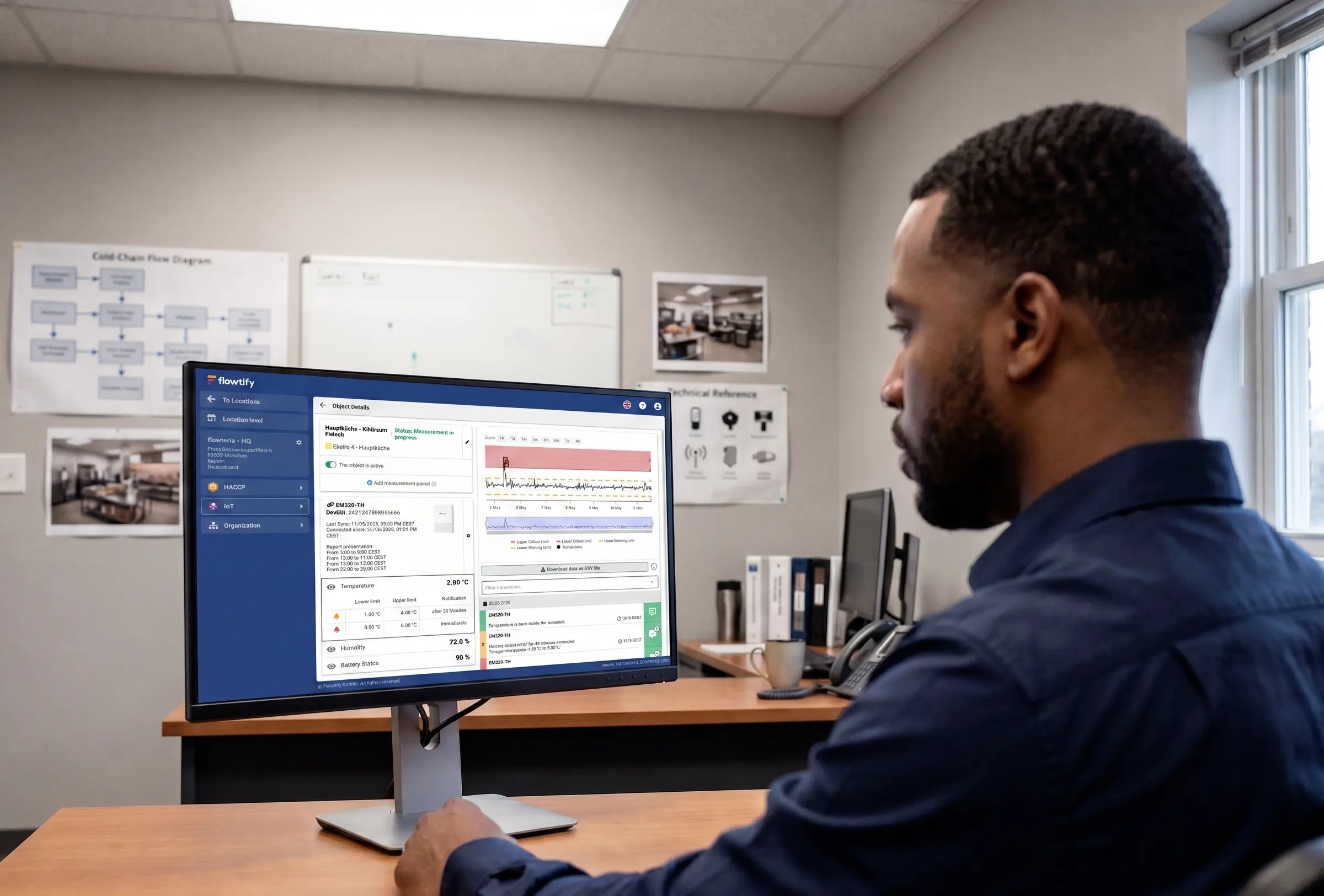
Digital sensors complement these self-checks with continuous monitoring. Sensors capture values around the clock and create complete temperature curves.
This makes it visible whether a unit is stable or shows recurring fluctuations throughout the day. Short spikes that often go unnoticed with manual checks are also recorded.
Limits can be defined clearly. When a limit is exceeded, the system detects the deviation automatically and alerts immediately.
Employees can check the situation on site and initiate an action. Temperature curves, deviations, and decisions remain fully documented.
Continuous monitoring complements classic on-site self-checks and provides a reliable basis for evaluating critical temperature areas.
Assess refrigeration objectively instead of debating assumptions
Temperature curves show whether equipment runs stably
Temperature curves provide more than single readings. They show how stable a unit actually runs in daily operations.
A single reading can create the impression that everything is fine. Only a curve over several hours or days shows whether temperatures remain constant or fluctuate regularly.
Recurring spikes can indicate technical issues: door seals do not close properly, ventilation slots are blocked, or units operate under excessive load.
Organizational causes also become visible: units are opened too frequently, products are stacked too tightly, or airflow is obstructed.
Temperature curves make such patterns visible early. Responsible roles can assess whether a unit is stable or whether maintenance and adjustments are needed.
Decisions are no longer based on snapshots, but on traceable data. Technology, operations, and quality assurance use the same information base.
Detect temperature deviations early and handle them in a structured way
From an alert to a documented action on site
Temperature deviations arise in daily operations faster than many processes can react. Refrigerated units are opened frequently, goods are rearranged, or units temporarily reach performance limits under high load.
That is why what matters is not only the measurement, but how a deviation is handled.
When a reading exceeds a defined limit, the system detects the situation automatically and reports the deviation immediately. Employees can verify the alert on site and decide which action is required.
Typical steps include a re-measurement on the product, checking goods, or adjusting device settings. Organizational causes like blocked airflow or overly dense stacking can also be identified quickly.
Assessment and actions are documented directly. This keeps it traceable what was checked, which decision was made, and when the case was closed.
Temperature monitoring becomes part of a structured self-monitoring system. Deviations do not stop at an alert: they are assessed, handled, and documented on site.
flowtify AUDIT assessing objectively
Conduct audits with flowtify AUDIT
When documentation and on-site reality are assessed together
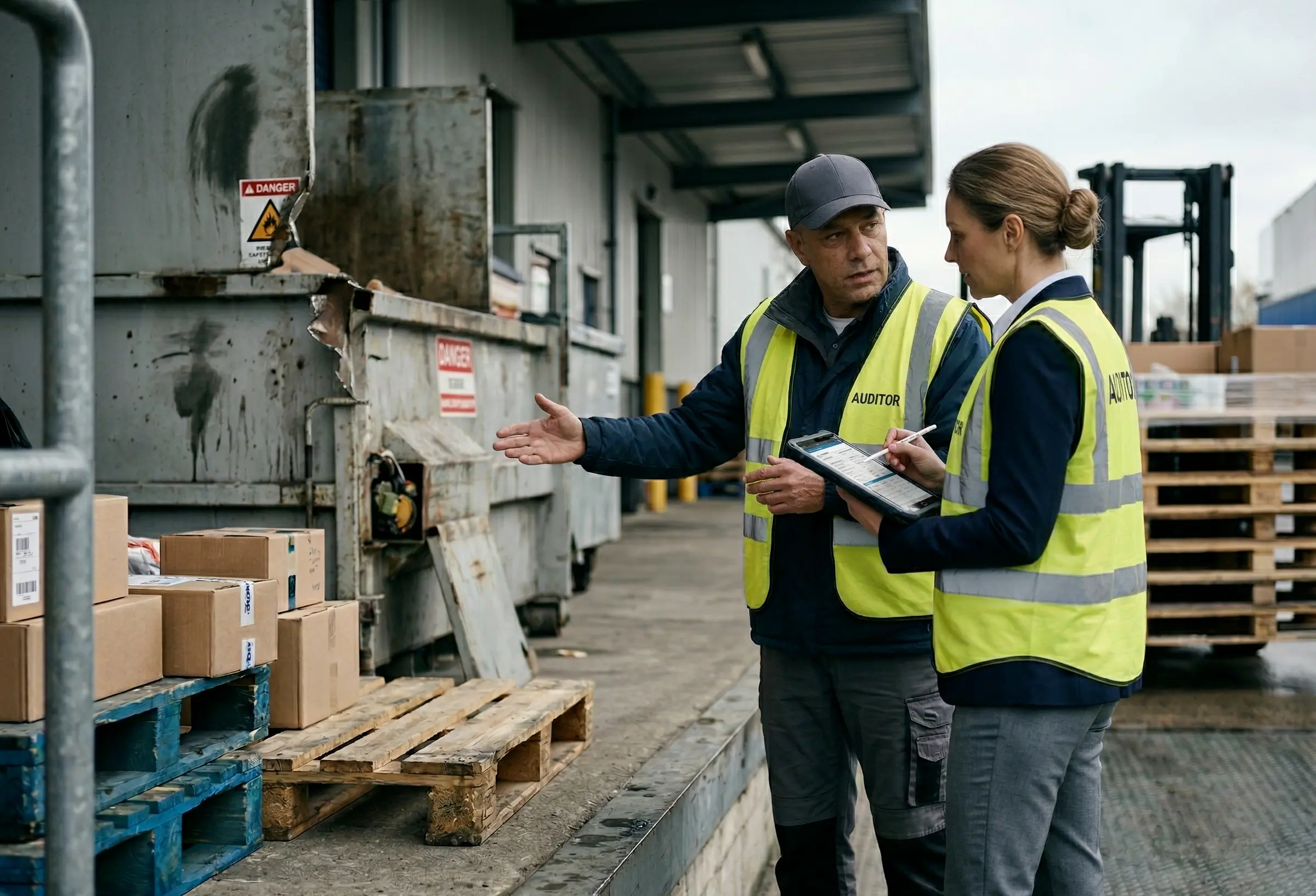
Audits complement ongoing self-checks with a structured on-site verification. They assess not only whether documentation exists, but whether standards are actually met at the location.
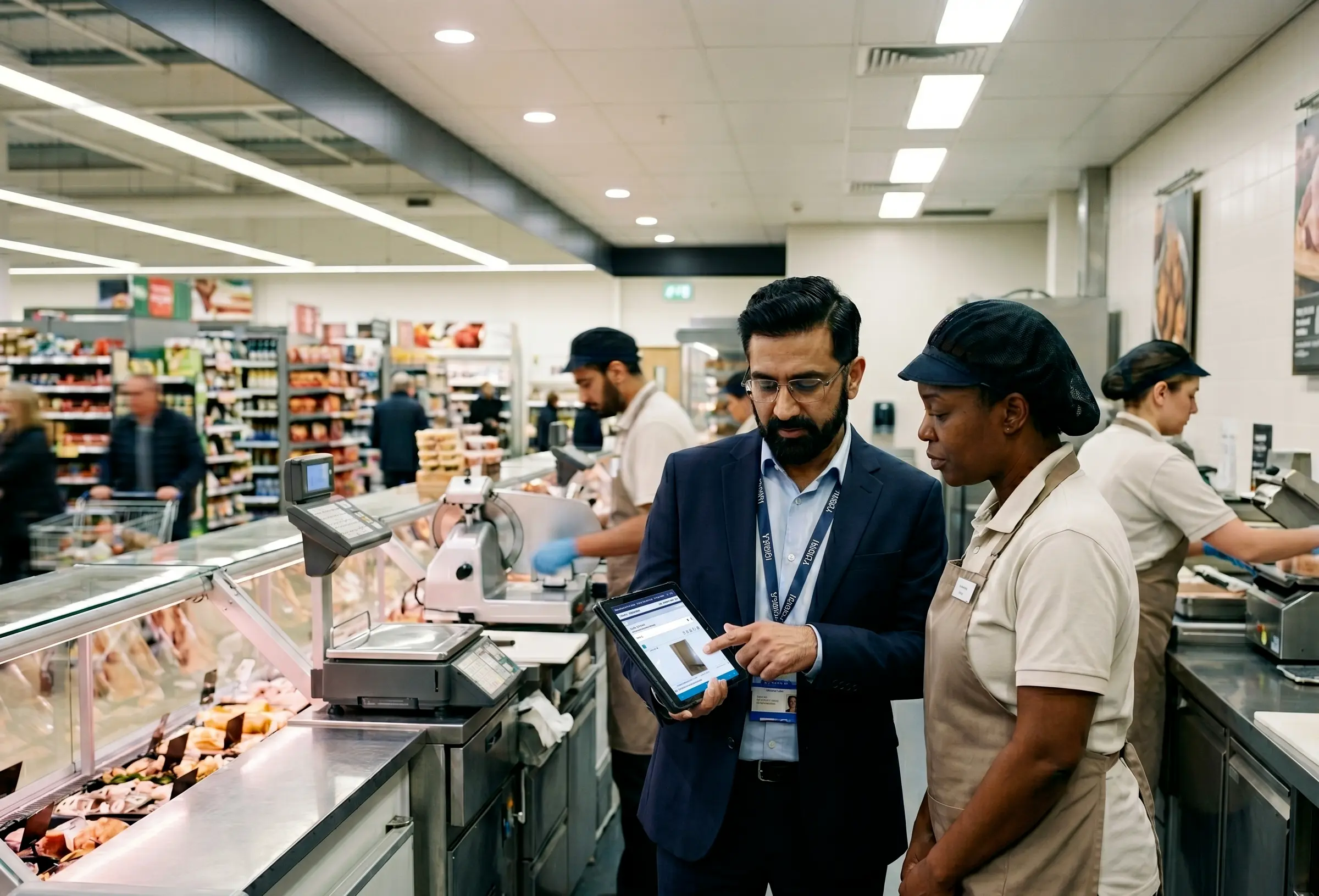
An auditor starts in the sales area. HACCP and hygiene documentation is complete, temperature values are within limits. Yet issues become visible: a cart blocks the emergency exit, a light is missing required shatter protection, a floor tile is damaged.
Such findings are assessed and documented immediately. The emergency exit is cleared right away and documented. A deadline is set for the missing shatter protection and assigned to the responsible role. The damaged tile is captured as an action with a longer implementation deadline.
The outcome evaluates the site based on consistent criteria. Unlike ongoing HACCP self-documentation, which maps concrete tasks and checks in daily work, the audit assesses processes, conditions, and standards in a broader context. Audit results become comparable across locations and audit cycles.
An audit provides more than a snapshot. It shows whether documented workflows actually work in daily operations, and where actions must be tracked consistently.
Convert findings into actions and approvals
Do not just record issues: resolve them with accountability
An audit does not end with an evaluation. What matters is how identified issues are converted into actions and tracked through to closure.
Findings are captured as actions with clear ownership, deadlines, and documentation requirements. Handling sits where the issue can be resolved professionally: site management, facility maintenance, or an external service provider.
Implementation and approval remain separate. The person who implements an action is not automatically responsible for approving it. This keeps it traceable whether an issue has actually been resolved or whether further action is needed.
If evidence is insufficient, the case remains open and returns to the responsible person. If deadlines are missed, open items are escalated to the next level.
Findings are not just documented: they are consistently driven to professional approval. Issues do not disappear in reports; they are handled as open items until they are closed.
Detect developments early through site comparison
Classify audit results across locations
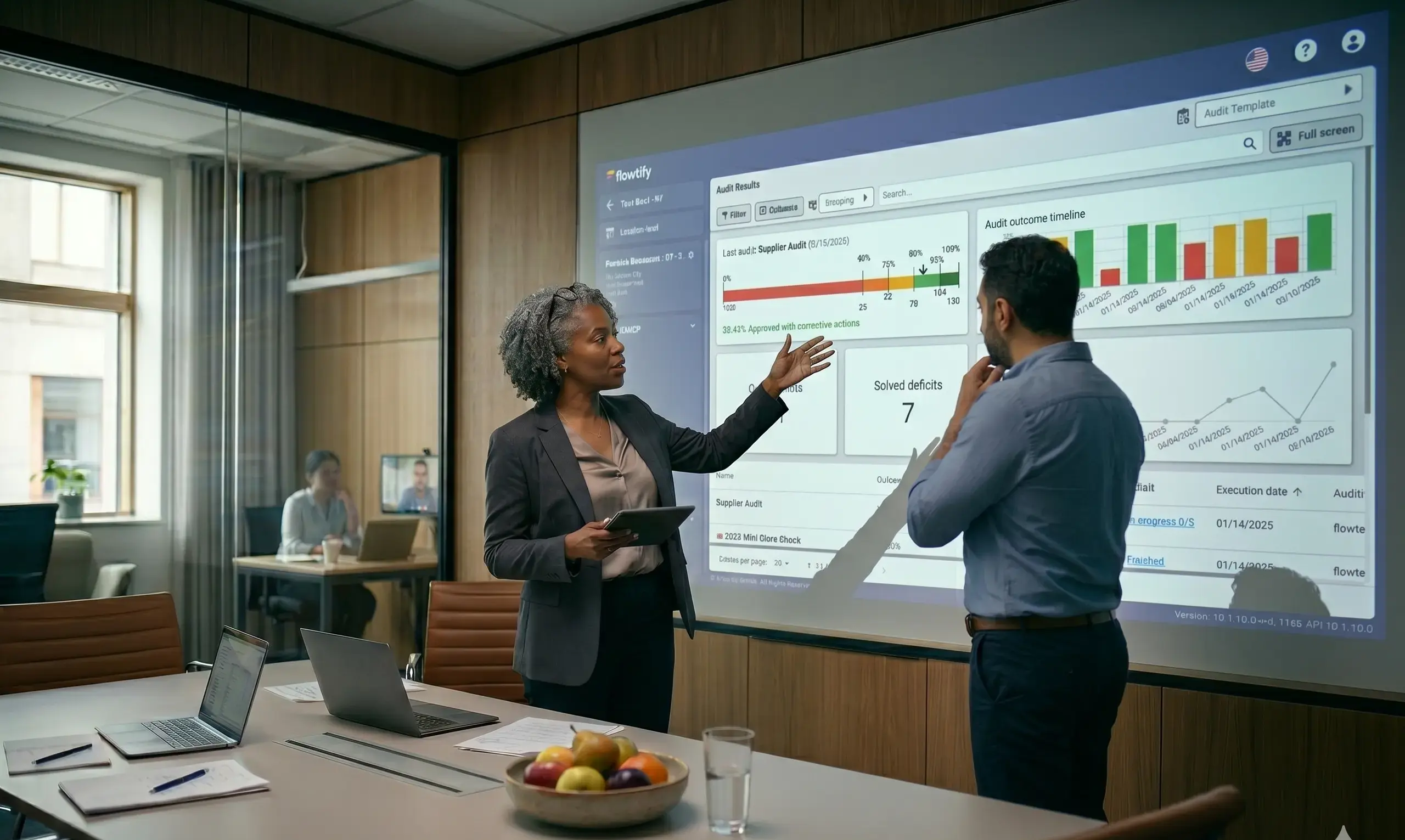
Individual audit results show the state of a site at a specific moment. Only by comparing multiple sites does a clearer picture emerge.
When results are viewed across locations, patterns emerge: some sites consistently achieve high scores, while others show recurring weaknesses in specific areas.
Such differences are easily missed when results are viewed only locally. Comparative analysis makes developments visible.
Sites can be observed over time. Improvements become visible, as do areas where problems repeat.
Comparing sites over time gives responsible roles a reliable basis for decisions. Support can be directed specifically where it is actually needed.
Identify risks early and act deliberately
Assess quality development over time and across locations
Audit results do not only show the state of a single site. When ratings are viewed across multiple audits, true quality development becomes visible.
If ratings improve continuously, this indicates stable processes and effective actions. If results stagnate or worsen over time, action is required.
Regional patterns also become visible: multiple sites in a region can show similar weaknesses, for example in equipment hygiene, labeling, or storage organization.
Such developments can be identified early when results are analyzed systematically. Responsible roles can prioritize actions before problems become entrenched.
Quality assurance becomes an effective steering instrument. Decisions are based not only on individual findings, but on traceable developments across sites and time periods.
Secure checks beyond core areas
Keep peripheral areas, technical rooms, and service areas in view
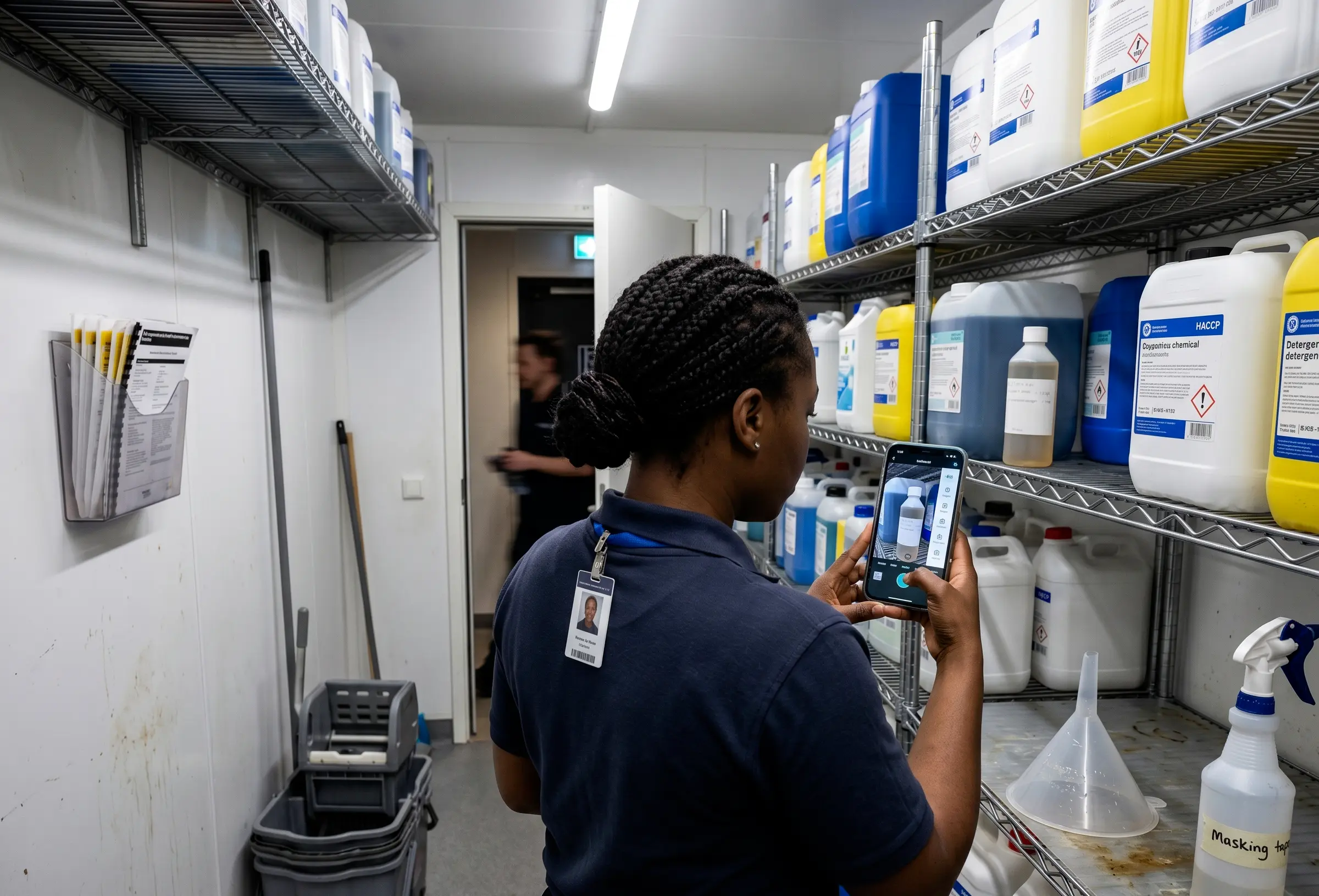
Many deviations do not occur in core work areas, but in peripheral zones: return storage, technical rooms, staff areas, or restrooms are checked less frequently and therefore slip out of view.
In return storage, dirty crates are mixed with clean ones. In technical rooms, cleaning devices or materials appear that do not belong there. In staff areas, open food and drinks are left on tables. In restrooms, mold appears on walls or ceilings. Incomplete first-aid kits or expired materials often only surface during audits.
When such points become visible in audits, they can be integrated into regular control routines. Checklists can define clear checkpoints and ensure these areas are not only checked occasionally.
Photo evidence makes on-site documentation easier. Issues can be captured directly and remain traceable for external stakeholders.
Photo evidence creates a more complete picture of the site. Quality assurance does not focus only on production and sales: it covers the entire operation.
flowtify SUPERVISION steering across sites
flowtify SUPERVISION in franchise and multi-site structures
Safeguard brand standards across franchise and company-owned sites
In many operations, roles beyond the on-site teams contribute to quality assurance: franchisors, regional operations management, external partners, or inspection bodies support processes, check standards, and assess developments across locations.
With flowtify SUPERVISION, these roles can be integrated into the platform intentionally, without changing operational responsibility at individual sites.
For this collaboration to work, information must be available in a traceable way. Documentation, checks, deviations, and actions must not exist only locally: they must also be visible at a higher level.
Access rights can be defined so external auditors or higher-level roles only see what is relevant to their task.
Operational responsibility remains clearly regulated, while transparency is created for higher-level analysis and external inspections. Quality assurance becomes a shared working foundation between sites, leadership, and external inspectors.
Roll out standards in new sites in a structured way
How self-checks, temperature monitoring, and audits become effective from day one
A new site opens. The system owner stores the system’s complete HACCP concept in the operator’s account. Based on this, digital checklists and system-specific self-checks are immediately available in flowtify HACCP, complemented by defined limits for temperature documentation.
The basis is validated product parameters, verified shelf lives, and microbiologically supported load limits. These requirements flow directly into daily checks and decision logic.
From the start, a HACCP concept with suitable digital checklists is available, consolidating expert requirements, product experience, and quality standards.
This foundation is not only useful for launch. It stays stable in ongoing operations because central requirements are consistently evolved and kept up to date.
Site-specific characteristics can be considered without changing central core standards. Even as the number of sites grows, the structure remains consistent and prevents gradual dilution of quality requirements.
Operations managers conduct internal excellence audits and review brand appearance, service quality, and operational execution. External certification audits are documented by independent inspection bodies. When samples are taken, lab results are added and reports are completed.
Daily self-checks, audit results, temperature data, and actions remain traceably documented at the site. Deviations, trends, and risks become visible early and form the basis for prioritization, resource allocation, and risk assessment.
Documentation at the site gives franchisors, operators, and external inspectors a reliable foundation on which they can develop quality assurance together.
Where you begin depends on what you're working with: budget, people, pace, and which sites need it first. Three typical entry paths show you what others have done.
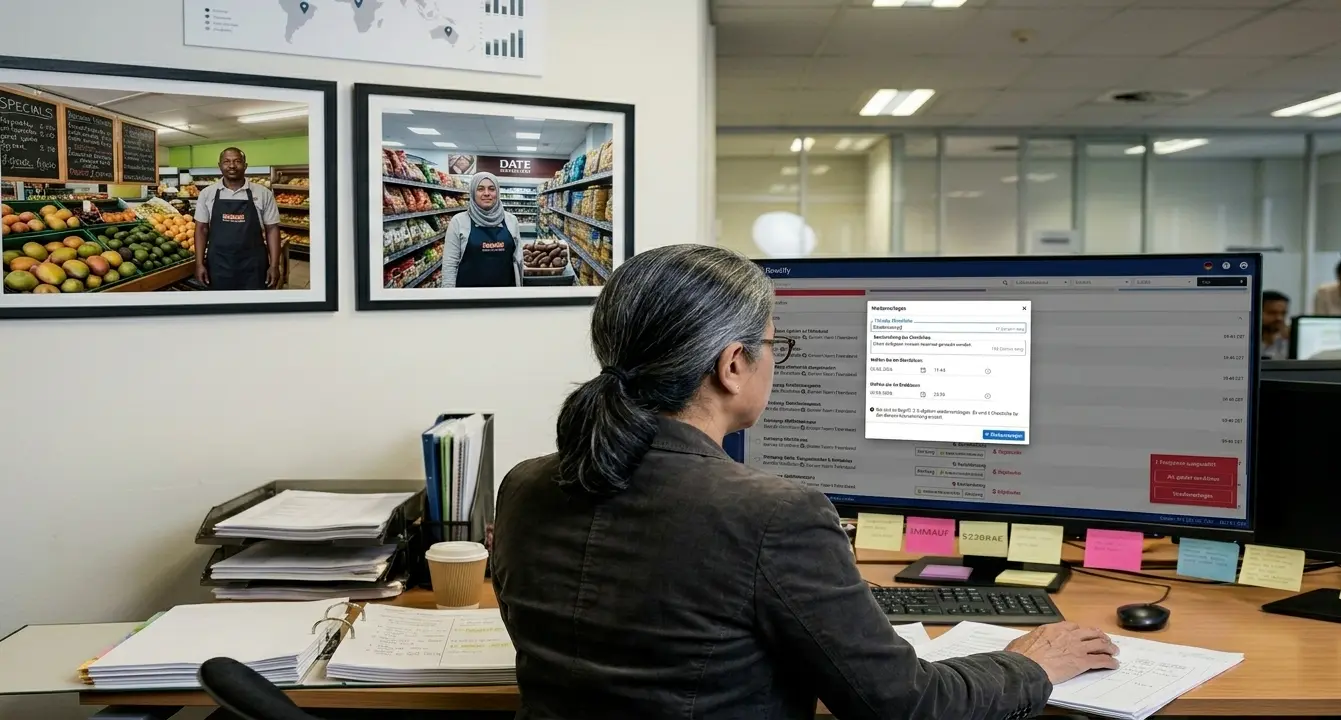
Comparability between independently operated stores and corporate stores
How quality assurance remains steerable across locations in grocery retail
In grocery retail, independent store owners often operate alongside corporate stores under one brand umbrella. Each store runs in its own account and carries entrepreneurial responsibility.
In many organizations, data silos emerge because HACCP documentation, temperature monitoring, and audit results are maintained in different systems or formats. Only when this information is consolidated on a shared platform does a reliable basis for cross-location analysis emerge.
At the same time, stores remain organizationally separated. Not every piece of information should automatically be visible to everyone. This is where flowtify SUPERVISION fits: with defined approvals, access to selected sites and specific modules, functions, and analytics can be controlled, without changing operational responsibility.
One example is store inspections and system audits. With flowtify AUDIT, results from store inspections, internal system audits, or external certification audits can be documented in a consistent structure and analyzed across sites. Differences become visible without removing operators’ independence.
Regional map views show where deviations cluster and where stores run particularly stable. Differences between independent owners and corporate stores become visible without organizationally merging accounts.
If multiple stores in a region repeatedly show elevated deviations or declining audit results, central teams receive a clear structural signal. Decisions can be made based on consistently captured KPIs across operating types, before structural weaknesses become entrenched.
Consistent KPIs create comparability in multi-site structures with decentralized responsibility. Brand management remains steerable, even with legally separate operators.
Scalable HACCP rollouts in care and institutional catering
How large kitchen networks can be standardized within a short timeframe
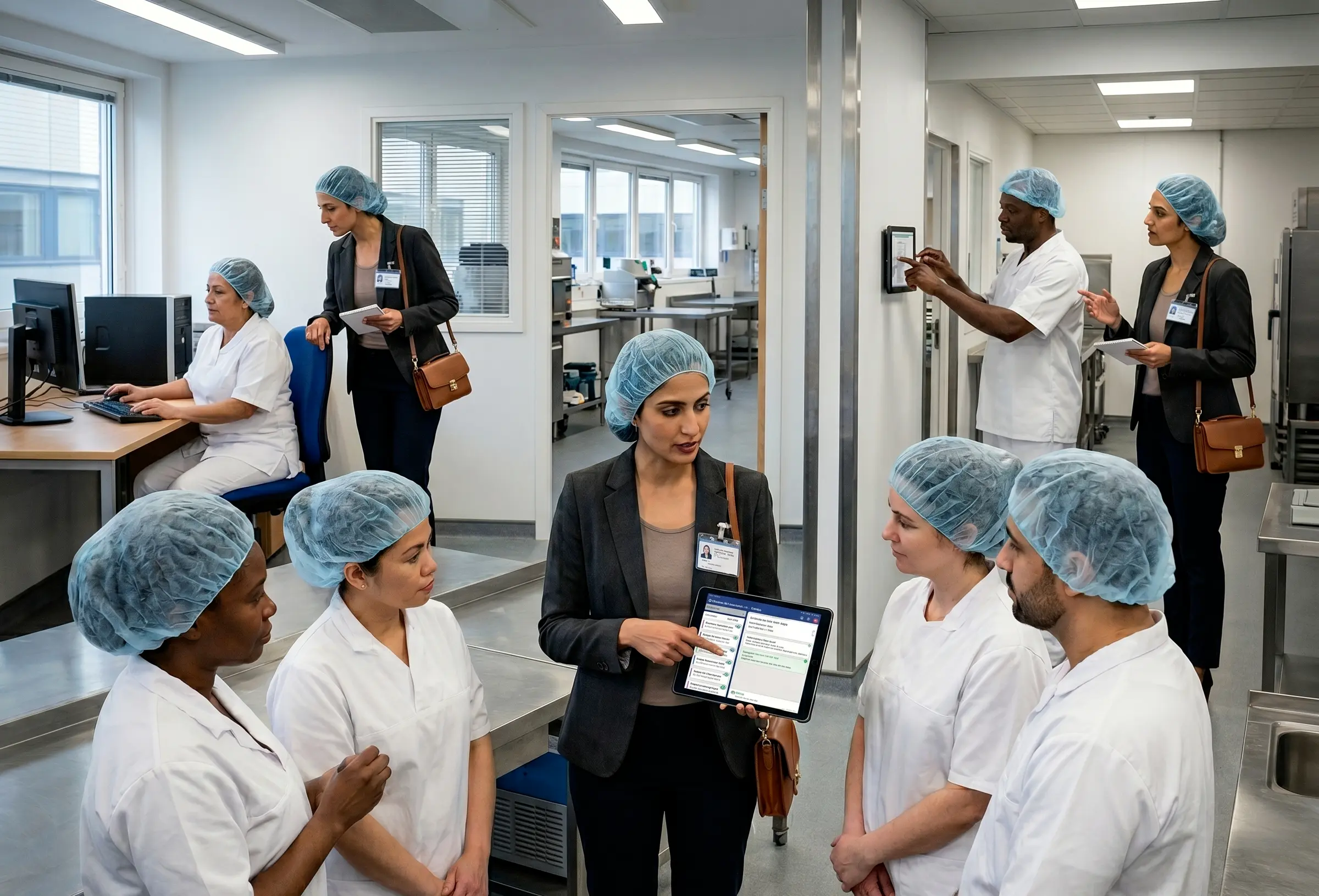
In care and institutional catering, quality assurance and digitization are often under significant time pressure. Dozens of kitchens or staff restaurants must be migrated to a unified HACCP and audit system within a few months. At the same time, central quality teams are deeply involved in daily operations and cannot handle concept work, setup, and site onboarding alone.
With clearly defined approvals, external consultants or supporting QM partners can be integrated into specific rollout steps when needed. They can support concept work, setup, or site onboarding where additional capacity or experience is required, without replacing internal responsibility.
Existing HACCP manuals, paper lists, or Excel templates are transferred into a consistent digital structure. For kitchen management and teams, this creates much more operational steerability. Open checks, due tasks, and deviations are visible immediately instead of appearing later through questions or missing evidence.
Responsibilities and deadlines remain clear even under time pressure. Ongoing operations can be prioritized better, even when multiple areas require attention at once.
Technical monitoring of critical refrigeration areas is integrated directly. With flowtify SENSORS, temperature curves are documented automatically and deviations become visible immediately. Daily on-site self-checks and continuous temperature monitoring complement each other within one documentation logic.
All sites then work within the same structure. Checkpoints, limits, and control intervals are defined centrally and can be adapted per site if needed, without changing the shared system logic.
For central quality teams, this creates a clear overview of the entire network. Recurring deviations, open actions, or unusual temperature developments can be detected early and prioritized.
On-site visits focus on locations with a clearly visible need for action. Many assessments can already be done based on current data. Travel time decreases while steerability increases.
Even across many sites, the rollout remains manageable. Quality assurance grows within a shared structure that remains stable and steerable over time.
A shared foundation for checks, deviations, and actions
How quality assurance can be steered as a cohesive system across all locations
In many organizations, information relevant to quality assurance is created in different places: daily HACCP checklists sit in binders at the site; cold-room monitoring runs in a refrigeration vendor’s software; audit reports are worked through on paper; Excel templates sit in headquarters or with an auditor. Each level serves a purpose, but across multiple locations, this rarely creates a resilient and comparable view of the real state on site.
Those responsible for many locations, regions, or countries do not assess single documents: they assess relationships. Open HACCP deviations, overdue audit actions, and current temperature deviations influence each other. If they are viewed separately, questions, coordination, and delays arise before a clear picture emerges.
flowtify consolidates this information in a shared platform for HACCP processes, hygiene documentation, audit management, and temperature monitoring. Employees document daily checks on site. Temperature deviations are captured automatically. Audit findings are converted into actions and remain traceably documented until closure.
For site management and quality roles, this creates a new perspective on ongoing operations. Deviations do not become visible only at the next audit: they become visible in daily work. Actions can be prioritized, developments become visible in site comparisons, and structural issues surface earlier.
Responsibilities remain clearly defined. Shift leads document their checks, store managers keep an eye on open actions, regional leads recognize developments across sites, and central quality management evolves processes and rolls out updated standards to all locations.
The workflow follows a clear PDCA logic: deviations lead to actions, actions to verifiable outcomes, and outcomes to adapted standards. Improvements become visible during operations, often earlier than internal system audits or external certifications.
Quality assurance gains a shared foundation for checks, deviations, and actions across all locations.

Steer accountability, escalations, and approvals across the network
How quality assurance stays coordinated and traceable across multiple levels
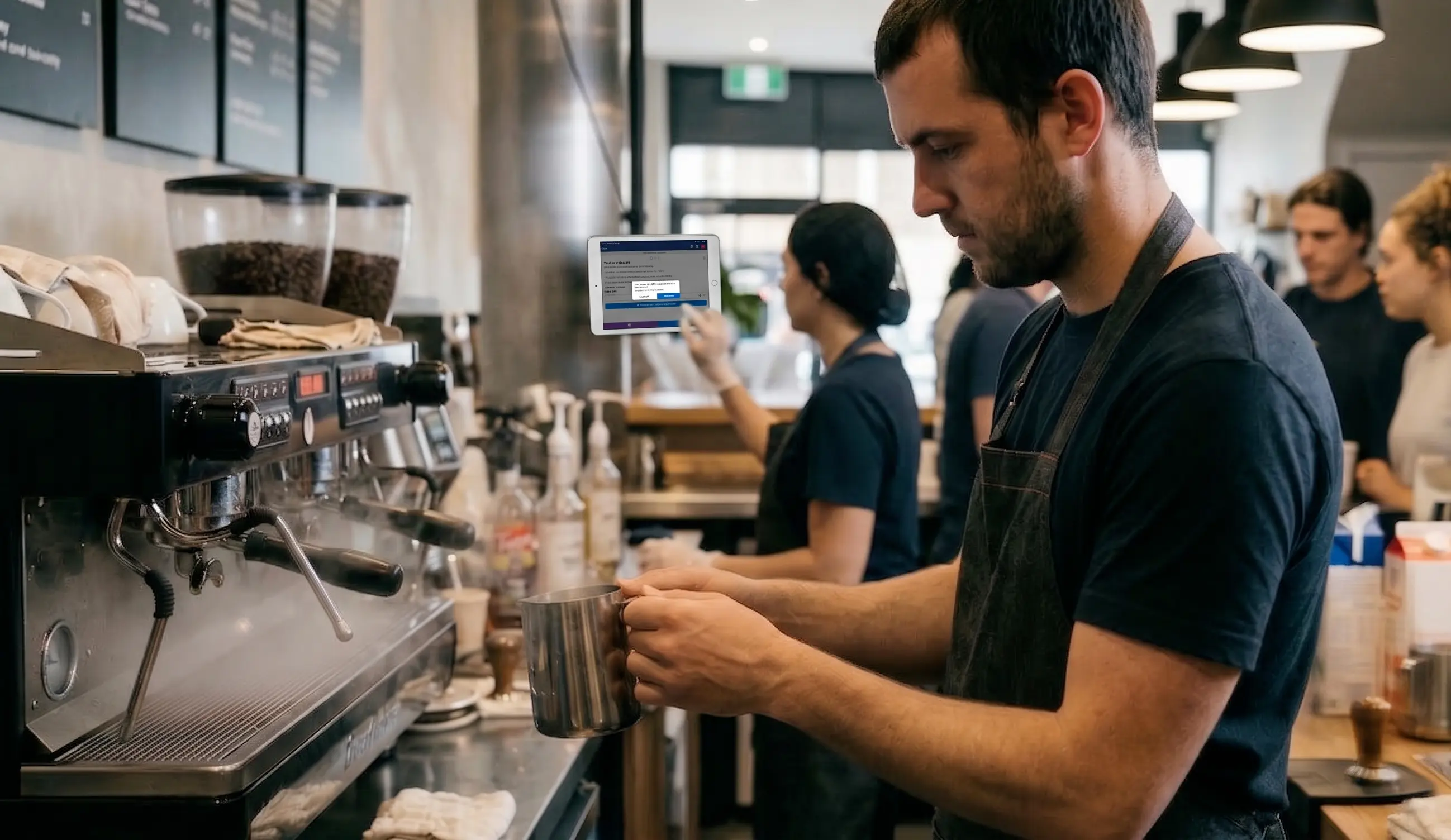
In multi-site structures, responsibility is distributed across levels: employees document daily checks; shift leads react to deviations; store management keeps open items in view and prioritizes actions.
Regional leadership recognizes patterns across sites, while central quality management evolves processes and ensures compliance and audit readiness at an organization level.
On the flowtify PLATFORM, all levels access the same up-to-date data base. Cases remain documented in context and do not need to be transferred between systems or lists.
If a task remains open or a deadline is missed, the case automatically becomes visible at the next level. Escalations follow the existing responsibility structure, without extra coordination loops.
Approvals happen where they belong professionally: shift leads confirm completed checks; store managers assess deviations and initiate corrective actions; regional leadership analyzes developments; central quality management updates standards and rolls them out to all locations.
New sites, new leaders, or new operators do not need to reinvent quality assurance each time. Roles, responsibilities, approvals, and escalation paths are clearly defined and traceable in the system.
Quality assurance remains understandable, binding, and safely steerable, even during growth, change, and shifting responsibilities.
Grow the network with stable quality assurance
Authorities check systems occasionally. Expansion checks them every day
With each new location, requirements for consistency, evidence, and steerability at organization level increase. Quality assurance must not depend on individual commitment: it must be anchored in a resilient structure from the start.
With each additional site, it becomes clear whether HACCP documentation, internal system checks, audit management, and temperature monitoring work as an integrated steering system, or whether they run as separate parallel processes. The larger the network, the more important a unified framework for actions, approvals, and escalations becomes.
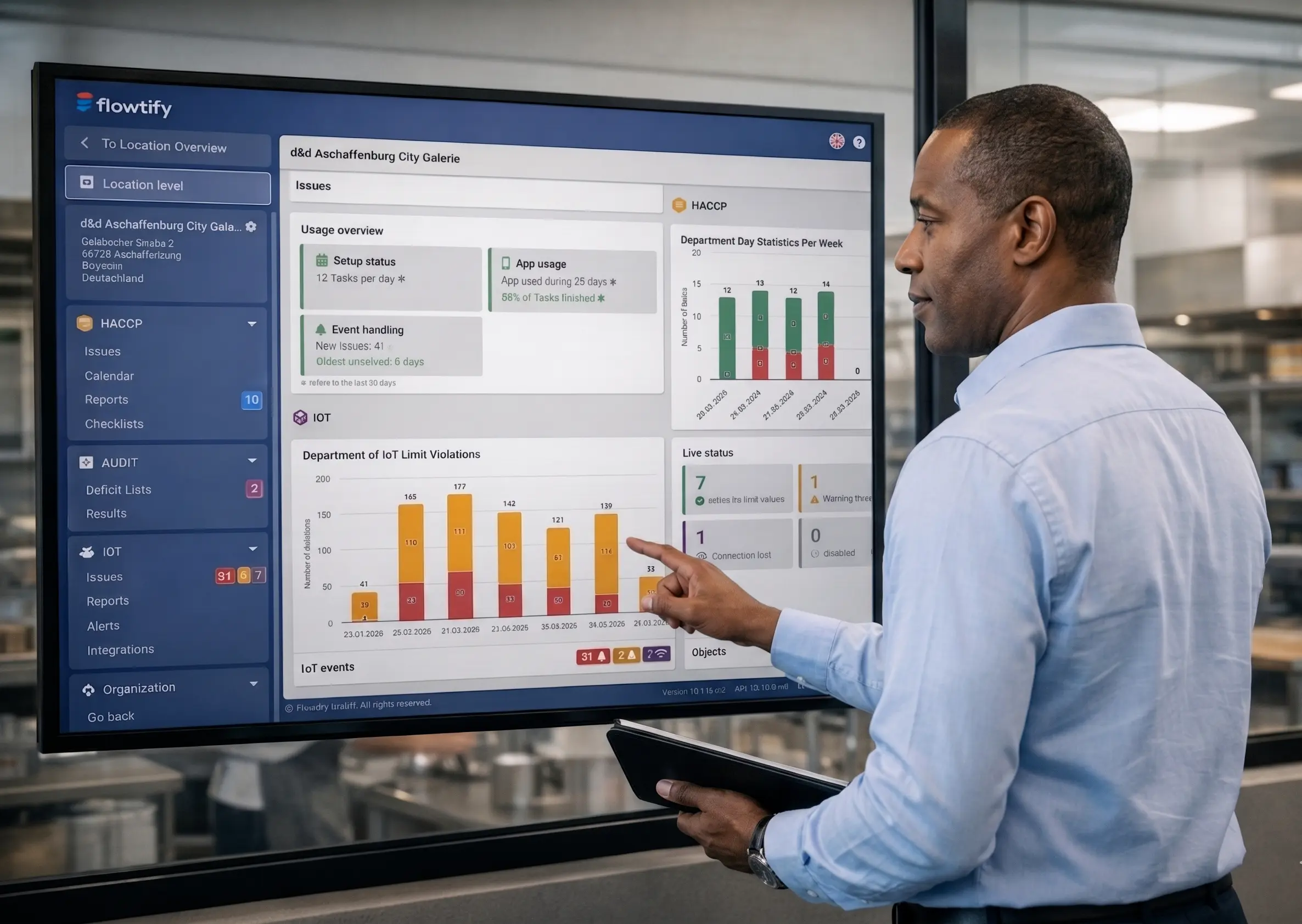
flowtify provides this framework centrally across the entire network. Standards, check intervals, and approval levels are defined once and apply consistently, regardless of operator structure or region. Updates from central quality management are rolled out centrally and become effective immediately in daily operations.
The central framework keeps quality assurance manageable, comparable, and audit-ready even as the number of locations grows. Cross-site analytics provide leadership with a reliable basis for prioritization, resource allocation, and risk assessment.
Related topics
Assess the flowtify PLATFORM in your own operation
Discuss your current practice together.